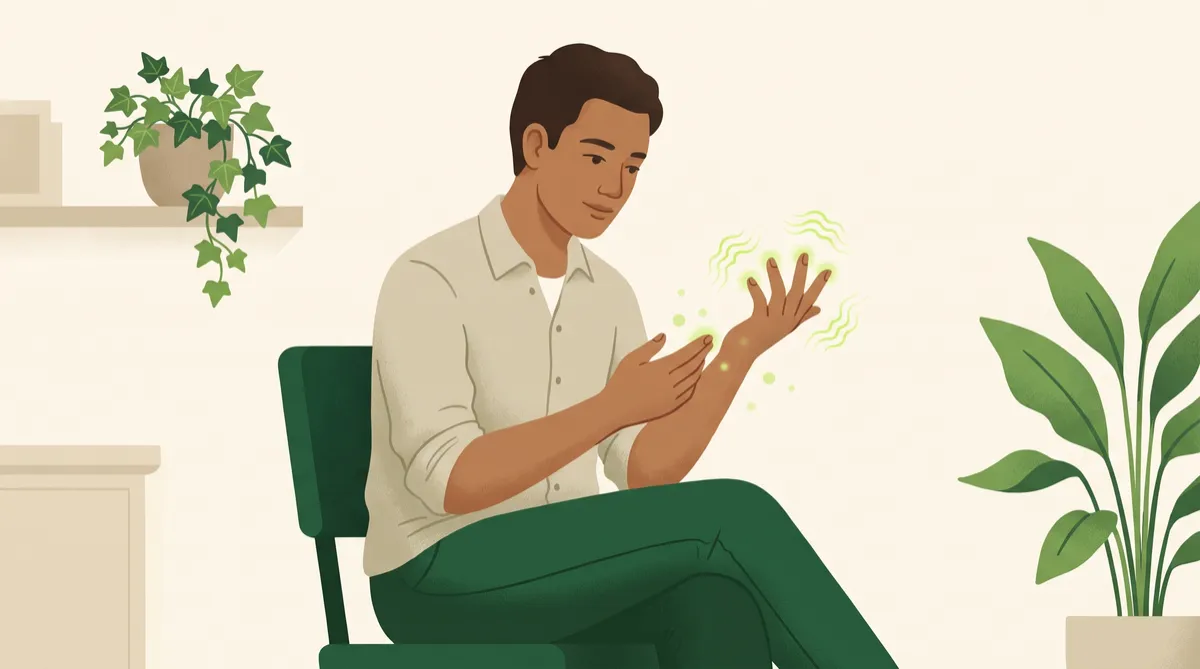
Can Anxiety Cause Tingling in Hands and Feet?
Have you ever noticed pins and needles in your fingers, numbness in your feet, or tingling around your mouth when you feel stressed or anxious?
Anxiety can cause physical symptoms, including tingling sensations. One possible explanation is hyperventilation, which occurs when you breathe faster or deeper than your body needs. Changes in breathing can alter carbon dioxide levels in your blood and contribute to tingling, dizziness, and other uncomfortable sensations.
However, anxiety is not the only possible cause. Nerve compression, diabetes, vitamin deficiencies, certain medications, and other medical conditions can also cause tingling or numbness.
Understanding when symptoms occur, how long they last, and whether other warning signs are present can help you decide what to do next.
Can anxiety cause tingling in your hands and feet?
Yes. Anxiety and panic attacks can cause tingling or pins and needles, particularly in the fingers, hands, feet, and area around the mouth.
During an anxious episode, you might notice:
Tingling or prickling in your fingers or toes
Temporary numbness in your hands or feet
Tingling around your lips or mouth
Dizziness or lightheadedness
A racing heartbeat
Rapid breathing or a feeling of breathlessness
Trembling, sweating, or intense fear
These symptoms may occur together during a panic attack or a period of heightened anxiety. However, their presence does not prove that anxiety is the cause.
Sudden numbness, especially on one side of the body, or tingling accompanied by weakness or difficulty speaking requires emergency assessment.
Why does anxiety cause tingling sensations?
There are several possible explanations for tingling during anxiety.
1. Rapid breathing can change carbon dioxide levels
When you feel anxious, you may begin breathing faster or deeper than usual without realizing it. This is called hyperventilation.
Overbreathing can lower the amount of carbon dioxide in your blood. The resulting changes in blood chemistry can contribute to tingling in the hands, feet, and around the mouth, along with dizziness or lightheadedness.
This can create a confusing cycle: you feel anxious, your breathing changes, tingling begins, and the unfamiliar sensation makes you even more worried.
Hyperventilation can also have medical causes, so new or severe breathing symptoms should not automatically be attributed to anxiety.
2. Your body's stress response becomes more active
Anxiety activates the body's stress response. You may experience a faster heartbeat, muscle tension, sweating, and changes in breathing.
These responses can occur together, making physical sensations more noticeable. Tingling may be one part of this broader response, particularly during intense anxiety or panic.
3. Muscle tension may contribute to nerve irritation
Stress can cause you to tense your shoulders, neck, hands, or other muscles. In some situations, posture or pressure on a nerve may contribute to tingling.
However, persistent tingling should not be assumed to result from muscle tension. Nerve compression and other medical conditions may require separate evaluation.
4. Attention to bodily sensations can increase worry
When you are anxious, you may pay closer attention to sensations you would ordinarily ignore. A mild tingling feeling can become more noticeable and trigger further worry.
The sensation is real, even when anxiety affects how strongly you notice it. But increased awareness does not rule out a physical cause.
Can anxiety cause tingling on just one side of the body?
Anxiety can produce a variety of physical sensations, but sudden tingling or numbness affecting one side of the body should not be assumed to be anxiety.
Sudden numbness or weakness in one arm, one leg, or one side of the face can be a sign of a stroke, particularly when accompanied by facial drooping, difficulty speaking, confusion, vision changes, or trouble walking.
Call 911 in the United States or your local emergency number immediately if these symptoms occur even if they improve or disappear.
Do not wait for a breathing exercise or relaxation technique to work before seeking emergency help.
What else can cause tingling in your hands and feet?
Anxiety is one possible cause, but recurring or persistent tingling can have several explanations.
Nerve compression
Pressure on a nerve in the neck, back, wrist, or another area can cause tingling or numbness. For example, carpal tunnel syndrome can affect the hand and fingers, while a compressed nerve in the back may cause symptoms that travel down a leg.
Diabetes and peripheral neuropathy
Diabetes can damage peripheral nerves over time. Tingling, burning, numbness, or reduced sensation in the feet and sometimes the hands may be associated with diabetic neuropathy.
Persistent symptoms warrant assessment, especially if you have diabetes or other risk factors.
Vitamin deficiencies
Certain nutritional deficiencies, including vitamin B12 deficiency, can affect nerve function. A clinician may consider nutritional status and blood tests when evaluating unexplained or recurring symptoms.
Thyroid and other medical conditions
Some metabolic or systemic conditions can contribute to nerve symptoms. The relevance of thyroid testing or other investigations depends on your symptoms, history, and examination.
Medication effects
Some medicines can cause tingling or nerve-related side effects. If symptoms begin after starting a medication or changing a dose, contact your healthcare professional. Do not stop prescribed medication without medical advice.
Temporary pressure on a limb
Sitting with your legs crossed or sleeping on an arm can temporarily compress nerves and cause pins and needles. This usually improves after you change position.
If tingling does not resolve, keeps returning, or worsens, arrange a medical assessment rather than assuming it is harmless.
How can you tell whether tingling is anxiety or something else?
There is no single symptom pattern that reliably confirms anxiety as the cause.
The following details may help a healthcare professional understand what is happening:
Timing: Does tingling occur during stressful situations, or does it also happen when you feel calm?
Duration: Does it pass quickly, or does it persist for hours or days?
Location: Does it affect both hands and feet, one limb, or one side of the body?
Associated symptoms: Do you also experience rapid breathing, dizziness, weakness, pain, or changes in coordination?
Possible triggers: Does it follow a particular posture, medication change, or period of physical activity?
Tingling that occurs alongside rapid breathing and other anxiety symptoms may be consistent with hyperventilation. But that pattern is not enough to exclude other causes.
A healthcare professional may review your medical history, perform an examination, and recommend tests if needed.
What should you do when anxiety causes tingling?
If you have no emergency warning signs and a clinician has helped you understand your symptoms, these strategies may help when anxiety or overbreathing is contributing.
1. Sit somewhere safe
If you feel dizzy or lightheaded, sit down to reduce the risk of falling. Pause strenuous activity while symptoms are occurring.
2. Let your breathing become gentle and comfortable
Try breathing slowly and naturally without forcing deep breaths or holding your breath. Focus on a comfortable rhythm rather than repeatedly checking whether the tingling has disappeared.
Stop if an exercise makes you feel worse. If rapid breathing is new, severe, or unexplained, seek medical assessment.
Do not breathe into a paper bag; this can be dangerous if the symptoms are caused by a condition other than anxiety-related hyperventilation.
3. Reduce immediate stress where possible
If you can do so safely, move to a quieter environment and use a grounding technique, such as noticing objects around you or feeling your feet against the floor.
These approaches may help reduce distress, but they should not replace medical care for new or concerning symptoms.
4. Keep track of recurring episodes
Record when the tingling occurs, which areas are affected, how long it lasts, and whether other symptoms appear.
This information can help your healthcare professional identify possible triggers and decide whether further investigation is needed.
When should you seek medical care for tingling?
Seek emergency medical help if tingling or numbness occurs with:
Sudden weakness or numbness affecting one side of the face or body
Facial drooping, difficulty speaking, or confusion
Sudden trouble walking, loss of coordination, or major vision changes
New severe symptoms with difficulty breathing or loss of consciousness
Also seek urgent assessment for rapidly worsening weakness, new difficulty controlling your bladder or bowels with numbness, or numbness around the groin accompanied by back pain or leg weakness.
Arrange a medical appointment if tingling:
Persists or keeps returning
Gradually worsens
Interferes with walking, using your hands, or everyday activities
Occurs with pain, weakness, or balance problems
Begins after a medication change
Has no clear explanation
Persistent tingling deserves evaluation even if you also experience anxiety. Identifying the cause is important because treatment depends on what is producing the symptoms.