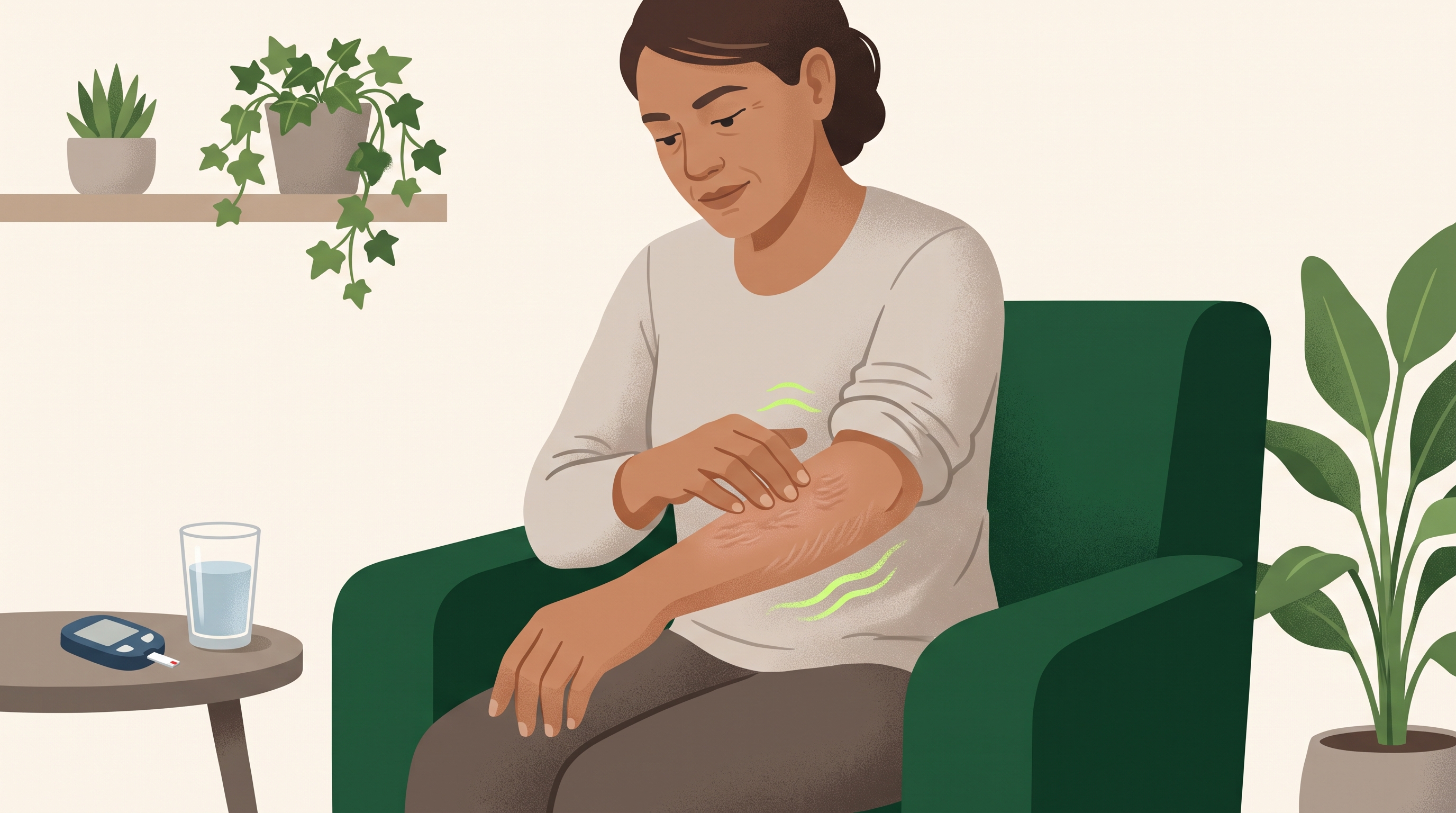
Can Diabetes Cause Itchy Skin? Understanding Dryness, Infections, and Skin Changes
Persistent itching can be frustrating, especially when it continues despite using moisturizers or changing soaps.
Sometimes, the explanation is straightforward: dry skin, irritation, allergies, or an environmental trigger. But recurring itching may also be associated with an underlying health condition.
One possibility worth understanding is diabetes.
Can diabetes cause itchy skin? Yes. Diabetes can contribute to skin dryness, increase the likelihood of certain bacterial and fungal infections, and cause specific skin changes. These problems may become more noticeable when blood glucose remains elevated.
However, itchy skin alone does not mean you have diabetes. Many other conditions can cause similar symptoms.
Understanding the relationship between blood sugar and skin health can help you recognize when further evaluation may be appropriate.
How Can Diabetes Affect Your Skin?
Your skin is the body's largest organ. It depends on adequate circulation, hydration, and normal immune function to remain healthy.
Diabetes can affect several of these processes.
When blood glucose remains elevated, it may contribute to:
Fluid loss and skin dryness
Changes in circulation
Reduced ability to fight certain infections
Delayed wound healing
Nerve-related changes in sensation
These effects can make some people with diabetes more vulnerable to itching, irritation, infections, and other skin conditions.
Not every person with diabetes develops skin problems, and the severity varies.
7 Reasons Diabetes May Be Associated With Itchy Skin
There are several possible explanations for itching in someone with diabetes.
1. Dry Skin and Dehydration
Dry skin is one of the more common reasons people with diabetes experience itching.
When blood glucose becomes significantly elevated, the kidneys may remove excess glucose through urine. This can increase fluid loss and contribute to dehydration.
Dehydration can make the skin feel:
Tight
Rough
Flaky
Irritated
Itchy
Dryness may be especially noticeable on the lower legs, feet, elbows, and hands.
However, dry skin is common in people without diabetes too. It is not a reliable way to diagnose blood sugar problems.
2. Fungal Infections
People with diabetes may be more susceptible to certain fungal infections, particularly when blood glucose is not well managed.
Fungi and yeast can thrive in warm, moist areas of the body.
Common examples include:
Athlete's foot
Jock itch
Ringworm
Certain yeast infections
Fungal infections around the nails
Symptoms may include itching, redness, scaling, irritation, and sometimes small blisters.
Recurring or persistent fungal infections deserve medical evaluation rather than repeated self-treatment without a confirmed diagnosis.
3. Bacterial Skin Infections
Diabetes can increase the risk of certain bacterial skin infections.
Examples include:
Boils
Folliculitis, which affects hair follicles
Styes
Infections around the fingernails
Cellulitis
Signs may include redness, warmth, swelling, tenderness, and sometimes pus.
These infections may require medical treatment. A clinician can determine whether antibiotics or another approach is appropriate.
4. Poor Circulation
Diabetes can contribute to blood vessel damage over time.
Reduced circulation may affect skin health, particularly in the lower legs and feet.
Some people experience dryness, irritation, or itching in areas where circulation is impaired.
Poor circulation can also make wounds harder to heal.
If you notice changes in skin color, temperature, sensation, or healing, arrange a medical evaluation.
5. Nerve Damage
Diabetic peripheral neuropathy affects nerves, particularly those in the feet and legs.
It can cause unusual sensations, including:
Tingling
Burning
Numbness
Pins and needles
Unusual sensitivity
Occasionally, sensations described as itching
Nerve-related itching may occur even when there is no obvious rash.
Persistent itching accompanied by numbness, burning, or tingling should be assessed rather than assumed to be ordinary dry skin.
6. Insulin Resistance and Darkened Skin Patches
A skin condition called acanthosis nigricans is associated with insulin resistance.
It produces areas of darker, thicker, velvety-looking skin, commonly around:
The back of the neck
The armpits
The groin
Other skin folds
This condition is not necessarily itchy, but it can be an important visible clue that metabolic evaluation may be worthwhile.
Acanthosis nigricans can also occur for reasons other than insulin resistance, so it should be interpreted in context.
7. Other Diabetes-Associated Skin Conditions
Diabetes can be associated with several less common skin conditions.
Examples include:
Diabetic dermopathy: Small, round or oval brownish patches that commonly appear on the shins. They are generally harmless and do not usually itch.
Necrobiosis lipoidica: A less common condition involving yellowish, reddish, or brown patches, often on the lower legs. Some affected areas may become itchy or painful.
Digital sclerosis: Thick, tight, waxy skin that may affect the fingers and make joint movement difficult.
Diabetic blisters: Uncommon blisters that can appear on the skin, particularly the feet and lower legs.
These conditions do not all look alike, and not every unusual skin change is related to diabetes.
A dermatologist or qualified healthcare professional can help identify the cause.
Where Does Diabetes-Related Itching Usually Occur?
The location of itching can provide useful clues, although it cannot establish a diagnosis.
Location | Possible explanation |
|---|---|
Lower legs and feet | Dryness, circulation changes, or nerve-related symptoms |
Groin | Fungal or yeast infection |
Under the breasts | Moisture-related irritation or fungal infection |
Between the toes | Athlete's foot or other skin conditions |
Neck and armpits | Acanthosis nigricans may cause darkened, thickened skin |
Hands and arms | Dry skin, eczema, irritation, or other dermatological conditions |
If itching is localized, recurrent, or accompanied by visible changes, a skin examination may help identify the cause.
Can Itchy Skin Be an Early Sign of Diabetes?
Sometimes, skin changes can appear before someone receives a diabetes diagnosis.
For example, recurrent fungal infections or acanthosis nigricans may prompt further evaluation of metabolic health.
However, itching alone is not a dependable early warning sign.
Other symptoms that may occur with diabetes include:
Increased thirst
Frequent urination
Increased hunger
Persistent fatigue
Blurred vision
Unexplained weight loss
Slow-healing wounds
Frequent infections
If several symptoms appear together, discussing blood glucose screening with a healthcare professional is sensible.
Is It Diabetes or Another Skin Condition?
Many conditions can cause itching, dryness, and irritation.
Some common possibilities include:
Possible cause | Typical features |
|---|---|
Eczema | Dry, inflamed, itchy patches |
Contact dermatitis | Irritation following exposure to a product or substance |
Psoriasis | Thickened, scaly patches that may be itchy |
Fungal infection | Itchy, sometimes ring-shaped or moist rash |
Dry skin | Flaking, tightness, and itching |
Medication reaction | Itching or rash associated with a medication |
Diabetes-related skin changes | May involve dryness, infections, circulation changes, or specific skin conditions |
The appearance of a rash can overlap between conditions. A clinician may need to examine the skin or perform additional testing.
What Tests Can Help Determine Whether Diabetes Is Involved?
If your symptoms and medical history suggest possible blood sugar problems, a healthcare professional may recommend laboratory testing.
1. Hemoglobin A1C
The A1C test estimates average blood glucose over approximately the previous three months.
Common diagnostic ranges for nonpregnant adults are:
Below 5.7%: Normal range
5.7%–6.4%: Prediabetes range
6.5% or higher: Diabetes range
An abnormal result generally requires confirmation unless there is unequivocal hyperglycemia.
2. Fasting Plasma Glucose
This test measures blood glucose after at least eight hours without eating.
Common diagnostic ranges are:
99 mg/dL or below: Normal range
100–125 mg/dL: Prediabetes range
126 mg/dL or higher: Diabetes range
3. Skin Examination
A clinician may examine the affected areas to look for signs of fungal infection, bacterial infection, eczema, circulation problems, or other skin conditions.
4. Additional Testing
Depending on your symptoms, medical history, and examination, further investigations may include:
Kidney function testing
Thyroid testing
Liver function testing
Vitamin B12 testing
Skin swabs or scrapings when an infection is suspected
Not everyone with itchy skin needs all these tests. The evaluation should be guided by the clinical findings.
How Can You Protect Your Skin If You Have Diabetes?
Good skin care can help reduce irritation and support the skin barrier.
1. Keep Your Skin Moisturized
Use a gentle, fragrance-free moisturizer, especially after bathing.
Pay attention to dry areas such as your lower legs, elbows, and hands.
If you have diabetes, avoid applying thick moisturizer between your toes, where excess moisture can encourage fungal growth.
2. Avoid Very Hot Showers
Hot water can remove natural oils from your skin and worsen dryness.
Choose lukewarm water and avoid unnecessarily long showers.
3. Use Gentle Cleansers
Harsh soaps and heavily fragranced products can irritate sensitive skin.
Choose mild cleansers and avoid products that consistently trigger itching.
4. Keep Skin Folds Clean and Dry
Areas such as the groin, underarms, and beneath the breasts can retain moisture.
Gently clean and dry these areas, particularly after exercise or sweating.
5. Avoid Scratching
Repeated scratching can damage the skin barrier and create openings for infection.
If itching is persistent, address the underlying cause instead of relying only on temporary relief.
6. Check Your Feet Regularly
If you have diabetes, inspect your feet every day for:
Cracks
Blisters
Redness
Swelling
Cuts
Changes in color
Signs of infection
Reduced sensation can make injuries difficult to notice.
Seek medical advice promptly if you discover a wound or unusual change.
7. Manage Blood Glucose
Keeping blood glucose within your individualized target range can help reduce the risk of certain diabetes-related skin complications.
Your healthcare professional can help establish appropriate targets and review your overall metabolic health.
When Should You See a Healthcare Professional?
Arrange an evaluation if you experience:
Persistent itching without an obvious explanation
Repeated fungal infections
Skin changes that continue to worsen
Darkened, thickened skin around the neck or armpits
Recurring boils or other infections
Dryness or cracking that does not improve
Itching accompanied by increased thirst or frequent urination
Seek prompt medical attention if an area becomes increasingly red, hot, swollen, painful, or produces pus.
Rapidly spreading redness, fever, chills, severe pain, or feeling seriously unwell may indicate a significant infection and requires urgent assessment.