Can Thyroid Problems Make Weight Loss Harder? | Primary Wellness NY
Quick Answer
Yes, thyroid problems—particularly hypothyroidism (underactive thyroid)—can make weight loss significantly harder. The thyroid produces hormones that regulate your metabolism, and when production is low, your body burns fewer calories at rest, making it easier to gain weight and harder to lose it even with diet and exercise . However, thyroid problems are rarely the sole cause of significant weight gain, and treating the thyroid condition may support weight loss but is not a standalone solution . A comprehensive medical evaluation can help determine whether your thyroid is playing a role.
Introduction
You are eating well. You are exercising regularly. You are doing everything "right." And yet, the scale refuses to budge. If this sounds familiar, you may have wondered: Could my thyroid be the problem?
It is a reasonable question. The thyroid gland plays a central role in regulating metabolism, and when it is not functioning properly, weight changes are common. But the relationship between thyroid health and weight is more nuanced than many people realize.
This article explores how thyroid problems affect weight, what to look for, and what steps you can take if you suspect your thyroid is interfering with your weight-loss efforts.
How the Thyroid Affects Metabolism
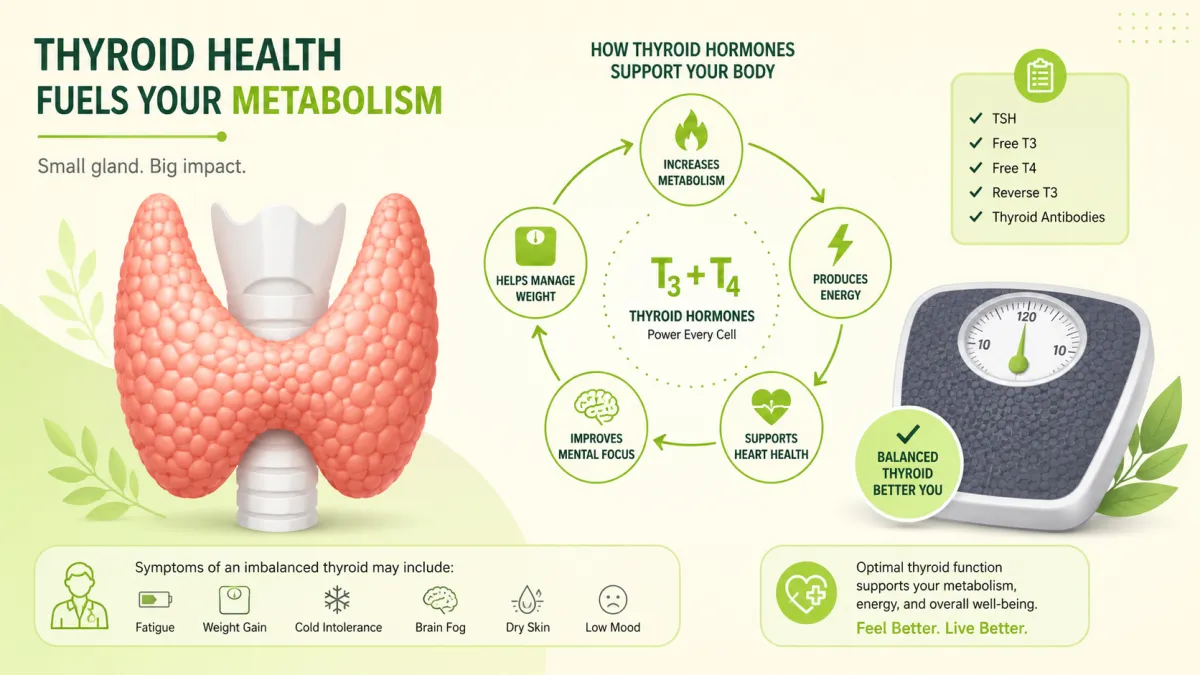
The thyroid is a small, butterfly-shaped gland located at the base of your neck. It produces two key hormones—triiodothyronine (T3) and thyroxine (T4)—that regulate how your body uses energy . Think of it as your body's "metabolic engine" .
When thyroid function is optimal, your metabolism runs smoothly, maintaining energy levels and stable body weight. But when thyroid function is disrupted, metabolism can slow down or speed up, leading to weight fluctuations .
Hypothyroidism: The Underactive Thyroid
Hypothyroidism occurs when your thyroid does not produce enough hormones. This slows your metabolism, meaning your body burns fewer calories at rest . As a result, weight gain and difficulty losing weight are common symptoms .
Why Hypothyroidism Makes Weight Loss Harder
Several mechanisms explain why hypothyroidism interferes with weight loss:
Lower basal metabolic rate: Your body burns fewer calories just to maintain basic functions
Reduced muscle mass: Hypothyroidism can lead to muscle loss, which further lowers calorie expenditure
Fluid retention: Hypothyroidism can cause fluid buildup, which may show up as weight gain on the scale even without fat accumulation
Fatigue: Low energy levels can reduce physical activity, making it harder to maintain an exercise routine
Increased fat storage: Low thyroid hormone levels make it harder for your body to break down fat, leading to more fat storage—especially around the abdomen
Symptoms of Hypothyroidism
Hypothyroidism often develops gradually, and symptoms can be subtle. Common signs include :
Unexplained weight gain or difficulty losing weight
Persistent fatigue and low energy
Sensitivity to cold
Dry skin and hair
Constipation
Depression or low mood
Muscle aches and cramps
Brain fog or difficulty concentrating
Changes in menstrual cycles
Even with thyroid treatment, weight variations can persist, affecting quality of life.
Hyperthyroidism: The Overactive Thyroid
Hyperthyroidism occurs when your thyroid produces too much hormone. This speeds up metabolism, often leading to unintended weight lost. Symptoms can include nervousness, increased sweating, a racing heart, and difficulty sleeping.
In rare cases, hyperthyroidism can cause weight gain due to increased appetite or treatment-related changes. Once treatment begins and metabolism normalizes, some weight gain is expected especially if the person lost weight before treatment.
Key Facts to Understand
Weight Gain Is Usually Modest
In hypothyroidism, weight gain is typically modest often 5 to 10 pounds and much of it may be due to fluid retention rather than fat accumulation. Significant obesity is rarely caused by thyroid dysfunction alone .
Other Factors Matter
Weight gain is influenced by multiple factors beyond thyroid function . Lifestyle habits, age-related metabolic changes, stress, sleep patterns, hormonal shifts, and certain medications also play major roles . Thyroid dysfunction may contribute, but it is rarely the only factor.
Thyroid Treatment Is Not a Weight-Loss Solution
Thyroid medications restore hormone balance and support normal metabolic function, but they are not weight-loss medications. Sustained weight management still depends on nutrition, activity, sleep, and overall health.
Some research suggests that adjusting thyroid medication can help with weight loss. One study found that people prescribed liothyronine (a more active form of thyroid hormone) lost an average of 0.6 pounds more per week than those on standard levothyroxine.
What Labs Should Be Checked?
A thorough thyroid evaluation typically includes:
TSH (thyroid-stimulating hormone) the primary screening test
Free T4 the inactive form of thyroid hormone
Free T3 the active form of thyroid hormone
Thyroid antibodies to check for autoimmune conditions like Hashimoto's disease
Some providers may also recommend testing Reverse T3 and vitamin D levels. A comprehensive approach helps ensure accurate diagnosis and appropriate treatment.