Difference Between Perimenopause and Menopause | Primary Wellness NY
Quick Answer
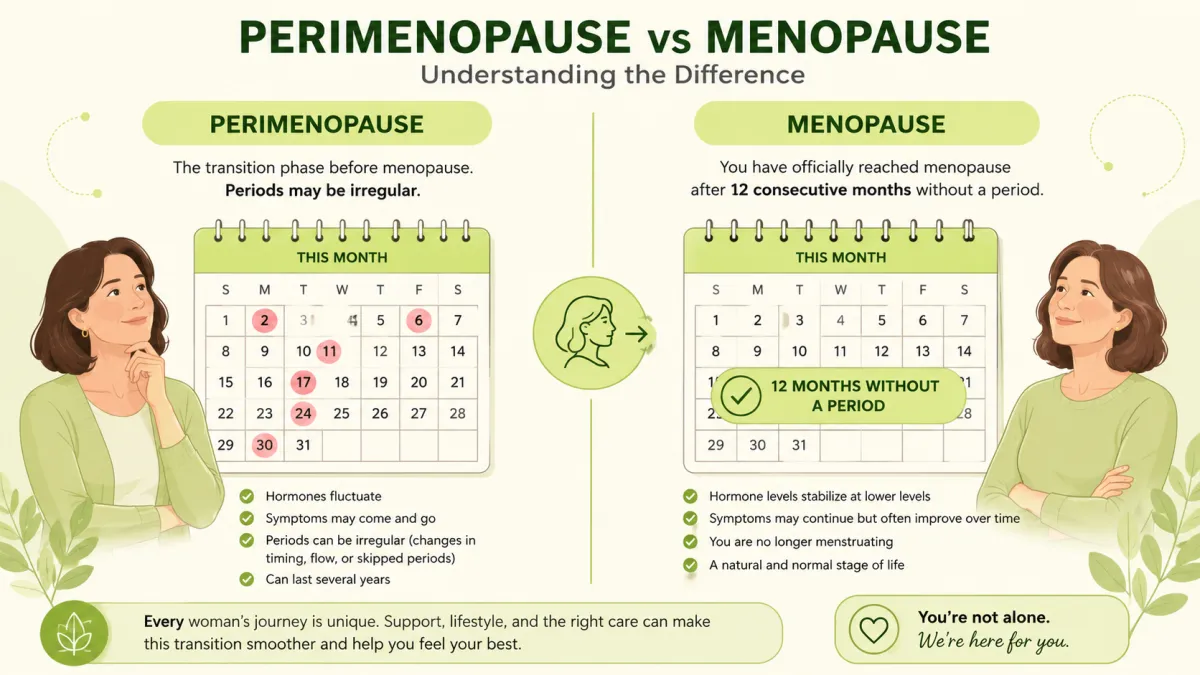
The key difference is simple: Perimenopause is the transition period leading up to menopause, while menopause is the point when your periods have stopped for 12 consecutive months. Think of perimenopause as the journey and menopause as the destination. Perimenopause can last anywhere from 2 to 10 years and is when most symptoms like hot flashes, sleep issues, and mood changes occur. Menopause itself is a single moment in time the anniversary of your final period and it marks the end of your reproductive years.
Introduction
If you are in your 40s or 50s and experiencing hot flashes, irregular periods, or sleep disturbances, you have probably heard the terms "perimenopause" and "menopause" used interchangeably. But they are not the same thing and understanding the difference can help you know what to expect and when to seek care.
Many women say they are "in menopause" when they are actually in perimenopause. This confusion is understandable the symptoms are similar, and the transition can feel like one long, continuous process. But there is a clear distinction, and knowing where you are in this journey can empower you to make informed decisions about your health.
This article explains the difference between perimenopause and menopause, what symptoms to expect at each stage, and when to see a provider.
What Is Perimenopause?
Perimenopause sometimes called the "menopause transition" is the period of hormonal change leading up to menopause. It is your body's way of preparing for the end of your reproductive years.
Perimenopause typically begins in a woman's 40s, but it can start as early as the mid-30s. It lasts on average 4 to 8 years, though it can range from 2 to 10 years. During this time, you still have periods, though they may become irregular. Because ovulation still occurs, you can still get pregnant, so contraception is still needed.
During perimenopause, your ovaries gradually produce less estrogen and progesterone. These hormonal shifts cause many of the symptoms associated with this stage hot flashes, sleep disturbances, mood changes, and irregular periods. Because hormone levels fluctuate unpredictably, symptoms can come and go.
What Is Menopause?
Menopause is a single point in time, not a prolonged phase. It is defined as the moment when you have not had a menstrual period for 12 consecutive months, and there is no other medical explanation for the absence of periods.
The average age of menopause in the United States is 51, though it most commonly occurs between ages 45 and 56. Once you reach menopause, you are in postmenopause for the rest of your life, and you can no longer get pregnant.
Menopause is diagnosed in retrospect you only know you have reached it after you have gone a full year without a period. At this point, your ovaries have stopped releasing eggs, and your estrogen and progesterone levels remain consistently low.
Key Differences Between Perimenopause and Menopause
The most important difference to understand is that perimenopause is the transition, while menopause is the destination. Perimenopause is the years of hormonal fluctuation leading up to your final period, whereas menopause is the single moment when you have completed 12 consecutive months without menstruation.
During perimenopause, your menstrual cycles are still occurring but often become irregular cycles may be shorter or longer, and bleeding may be heavier or lighter than usual. In menopause, periods have stopped entirely. Perimenopause typically lasts 2 to 10 years, with an average duration of 4 to 8 years, while menopause lasts for the rest of your life.
Because ovulation still occurs during perimenopause, pregnancy remains possible, so contraception is still needed. In menopause, pregnancy is no longer possible. Hormone levels during perimenopause fluctuate unpredictably, which often makes symptoms more intense and variable. Once you reach menopause, hormone levels remain consistently low, and while symptoms can continue, they often become less intense over time.
Symptoms of Perimenopause and Menopause
Symptoms in Perimenopause
During perimenopause, symptoms are driven by fluctuating not just declining hormone levels. This means they can come and go unpredictably. Common perimenopause symptoms include irregular periods that may be shorter or longer, heavier or lighter than usual. Hot flashes and night sweats are often more frequent during perimenopause than in menopause. Sleep disturbances are common, including trouble falling or staying asleep. Many women experience mood changes such as irritability, anxiety, or depressive symptoms. Brain fog, difficulty concentrating, and memory issues are frequently reported. Weight gain especially around the abdomen is common, as are vaginal dryness, fatigue, and low energy.
Symptoms in Menopause and Postmenopause
Once you reach menopause, symptoms can continue, but they often become less intense over time. Vasomotor symptoms like hot flashes typically subside after a few years, though about 8% of women may experience them for life. Vaginal dryness and urinary symptoms may persist and can even worsen with age. Sleep issues may continue if hot flashes persist or due to other factors. Weight and metabolic changes often require ongoing management, and lower estrogen increases the risk of osteoporosis, making bone health an important consideration.
When to See a Provider
You should consider a medical evaluation if your symptoms are interfering with your daily life or quality of life. If your periods are very heavy, occur more than once every three weeks, or last longer than a week, this should be evaluated. Any bleeding after you have gone 12 months without a period is called postmenopausal bleeding and should be evaluated by a provider promptly. You should also seek care if you want to understand your treatment options, including hormone therapy or non-hormonal approaches.