7 Warning Signs Your Hormones Are Out of Balance | Primary Wellness NY
7 Warning Signs Your Hormones Are Out of Balance (That Your Doctor Might Miss)
Quick Answer
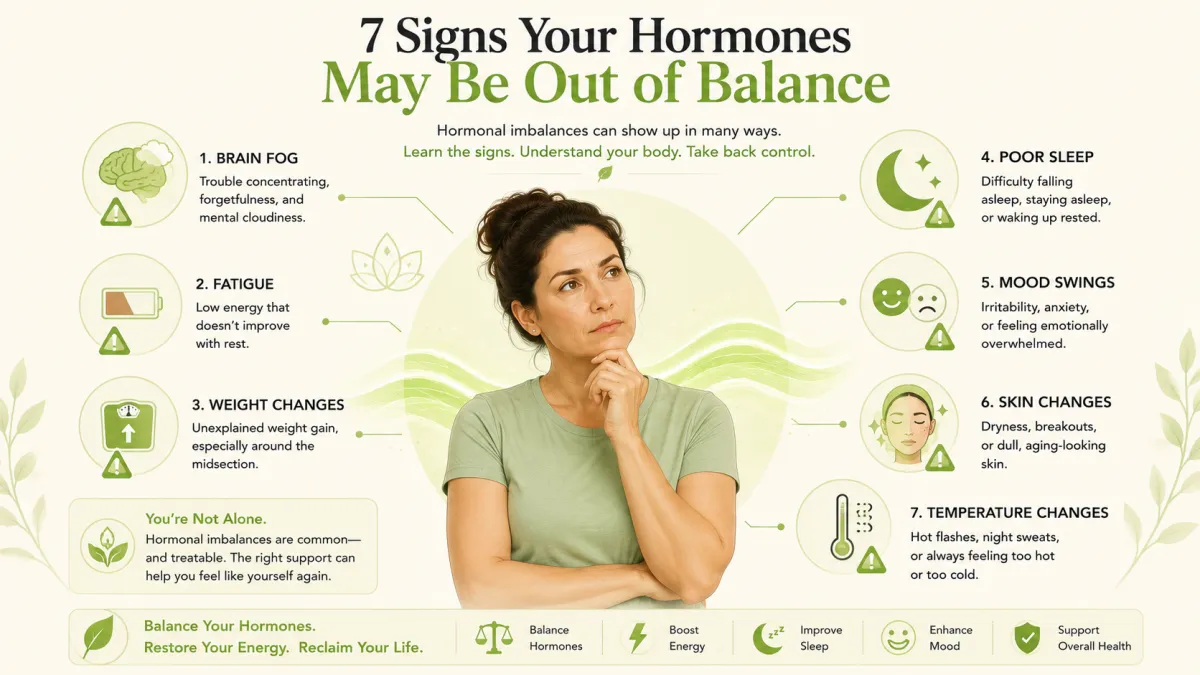
Hormone imbalances can cause a wide range of symptoms that are often dismissed as "just stress" or "normal aging." If you are experiencing several of these warning signs, it is worth investigating your hormone health: persistent fatigue that sleep does not fix, stubborn weight gain especially around the midsection, brain fog and difficulty concentrating, sleep disruption including waking at 3 AM, sudden changes in appetite or cravings, unexplained mood changes like irritability or anxiety, and skin and hair changes such as thinning hair, dry skin, or darkened patches. These symptoms often appear together in patterns that point to specific hormonal imbalances, and standard lab testing may miss subclinical shifts that are still affecting how you feel.
Introduction
You are doing everything right. You sleep enough. You eat well. You exercise. But something still feels off. You are tired all the time, your weight is creeping up despite your best efforts, and your brain feels like it is wrapped in cotton wool.
If this sounds familiar, you are not alone and you are not imagining things. These symptoms are real, and they often point to hormone imbalances that standard medical testing may miss. Many women in their 40s and 50s are told their labs are "normal" while they continue to struggle with fatigue, brain fog, and stubborn weight that will not budge. This disconnect happens because typical lab ranges reflect population averages, not the optimal levels where you personally function best. A hormone level that is "normal" for a large group may still be out of balance for your body.
Warning Sign #1: Persistent Fatigue That Sleep Doesn't Fix
You wake up after eight hours of sleep and feel like you have not rested at all. This is one of the most common signs of hormone imbalance, especially in perimenopause and menopause. When progesterone levels decline, its natural sleep-promoting effect is lost, making it harder to stay asleep and get deep, restorative rest. Declining estrogen can also disrupt sleep by triggering night sweats and hot flashes.
Fatigue from hormone imbalance feels different from ordinary tiredness. It is not resolved by sleep or rest. It can feel like you are running on empty, no matter how many hours you spend in bed. If you are consistently exhausted despite adequate sleep, your hormones may be signaling that something is off.
Warning Sign #2: Stubborn Weight Gain, Especially Around Your Midsection
Weight gain that seems to come from nowhere and a waistline that keeps expanding while the rest of your body stays the same is a classic sign of hormonal imbalance. Insulin resistance, elevated cortisol, and shifting sex hormones all promote fat storage around the abdomen.
During perimenopause and menopause, declining estrogen causes fat storage to shift from the hips and thighs to the belly, a pattern associated with increased metabolic risk. Cortisol from chronic stress also promotes central fat storage. And insulin resistance where the body produces too much insulin signals the body to store fat rather than burn it.
If you are gaining weight in your midsection despite maintaining the same diet and exercise habits, your hormones may be working against you. This belly fat is not just a cosmetic concern; it is linked to increased risk of cardiovascular disease and type 2 diabetes.
Warning Sign #3: Brain Fog and Difficulty Concentrating
You find yourself forgetting words, losing your train of thought, or struggling to focus on tasks that used to be easy. Brain fog is one of the most common and frustrating symptoms of hormone imbalance.
Estrogen supports cognitive function, including memory and concentration. When estrogen levels fluctuate or decline, brain fog often follows. Thyroid hormones also play a critical role in brain function; hypothyroidism can cause slowed thinking, poor attention, and mental fatigue. These symptoms are not just "getting older" they are often treatable when the underlying hormonal imbalance is addressed.
Warning Sign #4: Sleep Disruption Waking at 3 AM or Waking Tired
Waking up in the middle of the night, often around 2 or 3 AM, and struggling to fall back asleep is a classic sign of hormone imbalance. This pattern is often driven by declining progesterone, which helps you stay asleep, or blood sugar instability, which triggers cortisol surges that wake you up.
Chronic poor sleep affects hormone balance further, creating a vicious cycle. If you are waking up at night or waking up tired despite sleeping enough hours, your hormones could be the missing piece of the puzzle.
Warning Sign #5: Sudden Changes in Appetite or Cravings
If you are suddenly craving sugar, carbs, or salty foods or if you feel hungry even after eating hormones are likely involved. Insulin resistance can cause persistent hunger because your cells cannot effectively use glucose for energy. Chronic stress and elevated cortisol can also drive cravings for processed foods.
Progesterone and estrogen influence appetite-regulating hormones like leptin and ghrelin. When these shift, so does your appetite. Changes in appetite that feel involuntary or disproportionate to your usual eating patterns are worth discussing with a provider.
Warning Sign #6: Unexplained Mood Changes
Feeling irritable, anxious, or low for no clear reason can be a sign of hormone imbalance. Estrogen and progesterone influence serotonin and other mood-regulating neurotransmitters. When these hormones fluctuate, mood swings often follow.
Mood changes related to hormones often appear alongside other symptoms like fatigue and sleep disruption. If you feel like your mood is out of proportion to your circumstances, or if you are experiencing anxiety or depression that started around the same time as other symptoms, hormone evaluation is worth considering.
Warning Sign #7: Skin and Hair Changes
Thinning hair, dry skin, brittle nails, or darkened patches of skin can signal hormone imbalance. Hypothyroidism often causes dry skin and hair thinning. Acanthosis nigricans dark, velvety patches of skin in body folds is a classic sign of insulin resistance.
These changes are not just cosmetic. They can be early warning signs of metabolic or hormonal issues that, if addressed, may improve both your symptoms and your overall health.
When Hormones Are the Hidden Cause
What makes these symptoms particularly challenging is that they often appear together, with no single clear cause. You might be tired and gaining weight and feeling brain foggy and assume it is just stress or aging. But when these symptoms cluster, they often share the same underlying hormonal and metabolic contributors.
Standard lab testing may miss subclinical shifts that still affect how you feel. A woman can have entirely normal results while experiencing meaningful post-meal blood sugar variability, progressive changes in insulin sensitivity, and shifting fat distribution. If your labs are normal but you still do not feel normal, that is worth investigating further.