What Causes Low Energy in Men Over 40? | Primary Wellness NY
Quick Answer
Low energy in men over 40 is common but not a normal part of aging that you simply have to accept. Common causes include declining testosterone, thyroid disorders, poor sleep quality (including sleep apnea), insulin resistance and metabolic issues, chronic stress and elevated cortisol, and nutritional deficiencies including low vitamin D, B12, and iron. Lifestyle factors like physical inactivity, poor diet, and alcohol use also play significant roles. A medical evaluation with proper lab work can help identify which factors are affecting you.
Introduction
You used to have energy for days. You could work, exercise, socialize, and still have fuel left over. Now, by mid-afternoon, you are dragging. You feel like you are running on empty, and no amount of coffee seems to help.
If you are a man over 40 experiencing persistent low energy, you are not alone and you are not just "getting old." While some decline in energy is common as we age, a significant drop in energy levels is often a sign of an underlying medical condition that can be identified and treated.
This article explores the most common causes of low energy in men over 40 and what you can do to find answers.
Hormonal Causes
Low Testosterone
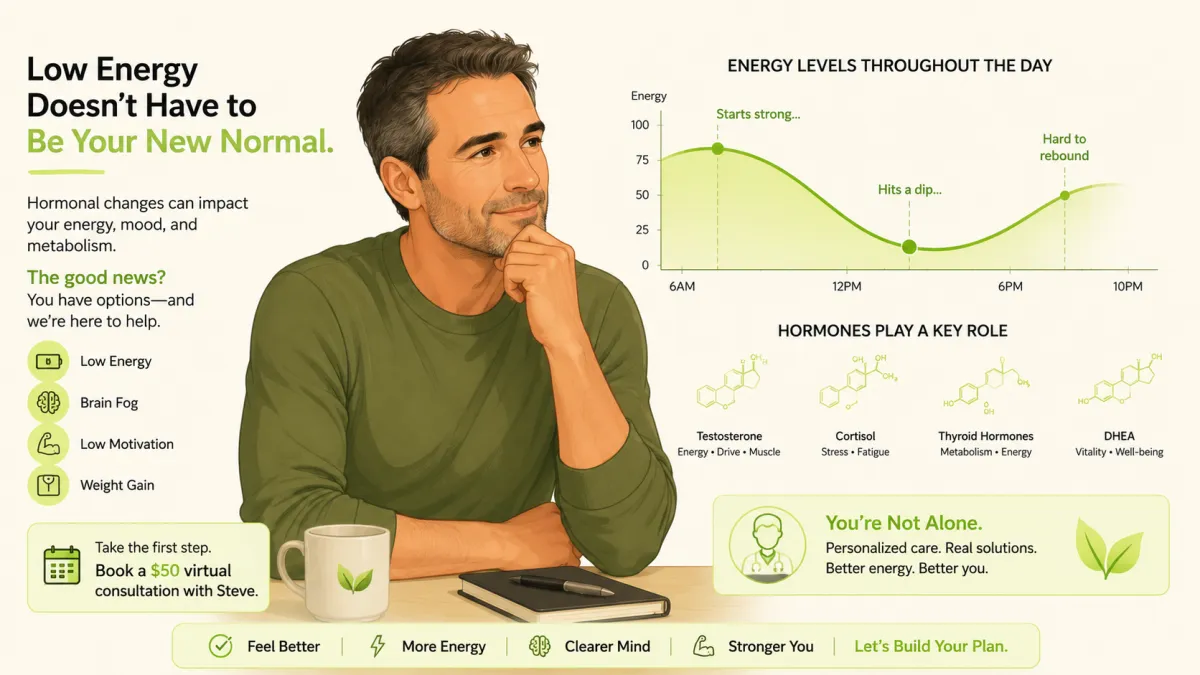
Testosterone is the primary male hormone responsible for energy, muscle mass, libido, and mood. Starting around age 30, testosterone levels begin to decline naturally at a rate of about 1% per year. However, some men experience a more significant drop a condition called late-onset hypogonadism or "andropause."
When testosterone levels fall too low, fatigue is one of the most common symptoms. Men with low testosterone often describe feeling tired despite adequate sleep, struggling to find motivation, and experiencing a general lack of drive. Other symptoms include reduced muscle mass, increased body fat, low libido, and mood changes including irritability or depression.
Low testosterone is one of the most common and treatable causes of low energy in men over 40. A simple blood test can determine if your levels are below the normal range for your age.
Thyroid Disorders
Your thyroid produces hormones that regulate your metabolism the rate at which your body uses energy. When your thyroid is underactive, a condition called hypothyroidism, your metabolism slows down. This can cause persistent fatigue, weight gain, cold intolerance, dry skin, and brain fog.
Hypothyroidism becomes more common with age and is often overlooked because its symptoms develop gradually. Many men attribute their fatigue to aging or stress when a thyroid condition is actually the cause.
Elevated Cortisol and Chronic Stress
Cortisol is your body's primary stress hormone. When you are under chronic stress, cortisol levels stay elevated. This can disrupt sleep, reduce energy, and interfere with testosterone production. Over time, chronic stress can leave you feeling exhausted, even when you are getting enough rest.
Sleep-Related Causes
Sleep Apnea
Obstructive sleep apnea is a condition where breathing repeatedly stops and starts during sleep. It is one of the most common and most overlooked causes of low energy in men over 40.
Sleep apnea causes your sleep to be fragmented, even if you do not remember waking up. This means you never get enough deep, restorative sleep. Common signs include loud snoring, gasping or choking during sleep, morning headaches, and daytime sleepiness.
Sleep apnea also disrupts testosterone production, creating a cycle where poor sleep lowers testosterone, and low testosterone may worsen sleep quality.
Poor Sleep Quality
Even without sleep apnea, poor sleep quality can drain your energy. Frequent nighttime awakenings, insufficient deep sleep, or sleeping fewer than seven hours per night can interfere with testosterone production and leave you feeling tired during the day.
Metabolic Causes
Insulin Resistance and Prediabetes
Insulin resistance occurs when your cells stop responding effectively to insulin. This leads to higher insulin levels in your blood and can cause fatigue, especially after meals. Insulin resistance is often accompanied by weight gain around the abdomen, sugar cravings, and brain fog.
Insulin resistance is a precursor to type 2 diabetes and affects about one in three adults. It is a surprisingly common cause of persistent low energy.
Nutritional Deficiencies
Several nutrient deficiencies can cause fatigue. Vitamin D deficiency is common, especially in areas with limited sunlight, and can affect energy, mood, and immune function. Vitamin B12 and iron deficiencies can lead to anemia, reducing oxygen delivery to tissues and causing fatigue. Low magnesium levels can also affect energy production and sleep quality.
Lifestyle Factors
Physical Inactivity
A sedentary lifestyle can actually make you more tired. Regular physical activity improves energy levels, enhances sleep quality, and supports healthy hormone production. When you are inactive, your body becomes less efficient at producing energy, which can leave you feeling sluggish.
Poor Diet
A diet high in processed foods, refined carbohydrates, and sugar can cause blood sugar spikes and crashes that leave you feeling exhausted. Inadequate protein intake can also affect muscle mass and energy levels.
Alcohol Use
Alcohol disrupts sleep quality, even if it helps you fall asleep initially. It can interfere with testosterone production and contribute to dehydration, all of which can drain your energy.
Dehydration
Even mild dehydration can cause fatigue. Many people do not drink enough water during the day, which can affect energy levels, concentration, and physical performance.
When to See a Provider
You should consider a medical evaluation if your low energy is persistent and interfering with your daily life. If you have other symptoms like weight changes, mood changes, sleep problems, or reduced libido, these may provide important clues about the underlying cause. If you have risk factors for conditions like sleep apnea, thyroid disorders, or insulin resistance, evaluation is especially important.
What Labs Should Be Checked for Low Energy in Men Over 40?
A thorough evaluation typically includes:
Testosterone total and free levels to assess for low T
Thyroid panel TSH, Free T4, and Free T3 to check for hypothyroidism or other thyroid issues
Fasting glucose and insulin to assess for insulin resistance
Hemoglobin A1c to check for prediabetes or diabetes
Complete blood count (CBC) to check for anemia
Vitamin D, B12, and iron studies to check for nutritional deficiencies
Comprehensive metabolic panel to assess kidney and liver function, and electrolyte balance
Lipid panel to check cholesterol and assess cardiovascular risk
Cortisol if chronic stress is suspected