What to Know Before Trying NAD+ Therapy | Primary Wellness NY
Quick Answer
NAD+ therapy has gained popularity as a potential way to boost energy and slow aging, but there are important things to know before trying it. NAD+ is a coenzyme found in every cell that plays a key role in energy production and cellular repair . NAD+ levels naturally decline with age, dropping approximately 50% between ages 20 and 60 . However, NAD+ therapies including IV infusions, injections, and supplements are not FDA-approved, and human clinical evidence for many of their anti-aging claims is limited . While they appear generally safe for short-term use, side effects can include nausea, headaches, and flushing, and there are theoretical concerns about stimulating cancer cell growth . A thorough medical evaluation is essential before starting any NAD+ therapy.
Introduction
You have heard about NAD+ therapy from celebrities, wellness influencers, or a friend who swears it changed their energy levels. You are feeling tired, low on energy, and curious whether this treatment could help you feel like yourself again.
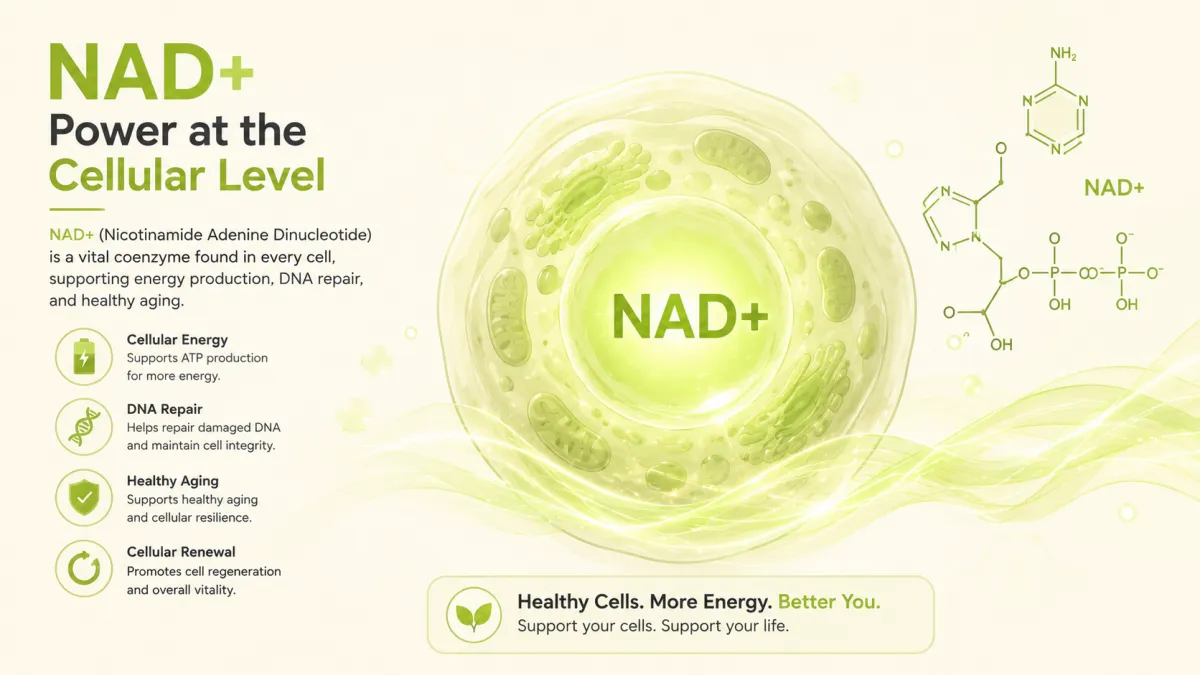
NAD+ short for nicotinamide adenine dinucleotide is a molecule found in every cell of your body that plays a key role in turning food into fuel . It is essential for cellular energy production, DNA repair, and stress response . As we age, our NAD+ levels decline, which has led to interest in therapies that aim to boost them.
But before you book an infusion or order supplements, it is important to understand what NAD+ therapy involves, what the evidence actually shows, and what you should consider before starting.
What Is NAD+ and Why Does It Matter?
NAD+ is a coenzyme that naturally occurs in every cell of your body . It has two essential functions: creating cellular energy from the food you eat and providing cellular defense against metabolic stress caused by factors like inflammation, infections, and aging .
NAD+ levels naturally decline with age, and this decline can compromise the body's ability to repair damaged cells and maintain metabolic balance . When NAD+ is in short supply, it can struggle to carry out its duties, contributing to cellular stress, inflammation, and age-related decline .
Because NAD+ creates cellular energy, it is highly demanded by high-functioning organs like the heart and brain . This is why therapies targeting NAD+ have gained attention for potential benefits related to energy, cognition, and healthy aging.
What Is NAD+ Therapy?
NAD+ therapies are medical interventions intended to increase or replenish your NAD+ supply . They are available in several forms:
NAD+ IV infusions are the most popular and expensive option, with sessions costing hundreds to thousands of dollars. The infusion typically takes about four hours .
NAD+ injections are administered into fatty tissue under the skin and take less time than IV infusions .
NAD+ supplements contain NAD+ precursors—substances your body uses to build NAD+—and are available at pharmacies. Common precursors include nicotinamide riboside (NR) and nicotinamide mononucleotide (NMN) .
Most NAD+ products are classified as dietary supplements, not FDA-approved medications. This means their safety, quality, and effectiveness have not been evaluated by the FDA .
What Are the Potential Benefits?
Because NAD+ plays such an important role in energy production and cellular repair, some people pursue NAD+ therapy to prevent health issues and potentially slow aging .
Promoters claim NAD+ therapy may support:
Increased energy and reduced fatigue
Improved brain function and mental clarity
Enhanced metabolic health
Better recovery from stress and injury
However, it is important to understand that much of the evidence is still developing. Research on NAD+ in animal models has shown promising results, including potential benefits for aging, metabolic health, and neurodegenerative diseases . But human clinical trials are limited, and large-scale, long-term studies are needed to confirm these benefits .
Some studies in humans have shown mixed results. For example, dietary supplementation with NR for 12 weeks did not improve insulin sensitivity in obese, insulin-resistant men, suggesting that translation from animal models to humans may be less straightforward than expected .
What Are the Risks and Side Effects?
NAD+ therapy is generally considered safe for most people in the short term, but side effects can occur .
Common side effects include:
Nausea and stomach discomfort
Headaches
Flushing
Lightheadedness
Diarrhea
Irritation at the injection site
During IV infusions, patients may experience a warming sensation in the chest or abdomen, nausea, or a feeling of pressure . These symptoms can often be managed by slowing the infusion rate .
More serious concerns include:
Cancer risk: Because NAD+ supports energy production in cells, there is theoretical concern that boosting NAD+ could potentially support the growth of cancer cells . This is not conclusive, but it is an area of concern that warrants caution, especially for anyone with a history of cancer .
Contamination risks: In 2024, the FDA issued a warning that some injectable NAD+ products may be unsafe because they are made with food-grade ingredients that are not sterile, potentially introducing bacteria or toxins that can cause serious reactions . The FDA has already received reports of people becoming very sick after NAD+ infusions, including severe chills, vomiting, shaking, and fatigue .
Long-term safety: There have not been long-term studies on NAD+ infusions, so the long-term effects are not known .
What to Consider Before Trying NAD+ Therapy
Ask yourself why you want to try it. Are you treating burnout, chasing a quick fix, or genuinely invested in long-term wellness? NAD+ therapy should be a considered medical decision, not a first resort .
Focus on lifestyle first. If you are not already sleeping well, eating a balanced diet, exercising regularly, and managing stress, those fundamentals should come first. NAD+ therapy is most effective when paired with healthy lifestyle practices .
Speak with a healthcare provider. A provider can review your medical history, check for contraindications, and help determine whether NAD+ therapy is appropriate for you. This is especially important if you have a history of cancer, advanced liver disease, or are pregnant or breastfeeding .
Be cautious about sources. If you are considering NAD+ infusions or injections, look for a reputable clinic staffed by certified, trained professionals in a clean environment . Products from unregulated sources may contain contaminants or impurities.