Why Am I Gaining Weight During Menopause? | Primary Wellness NY
Quick Answer
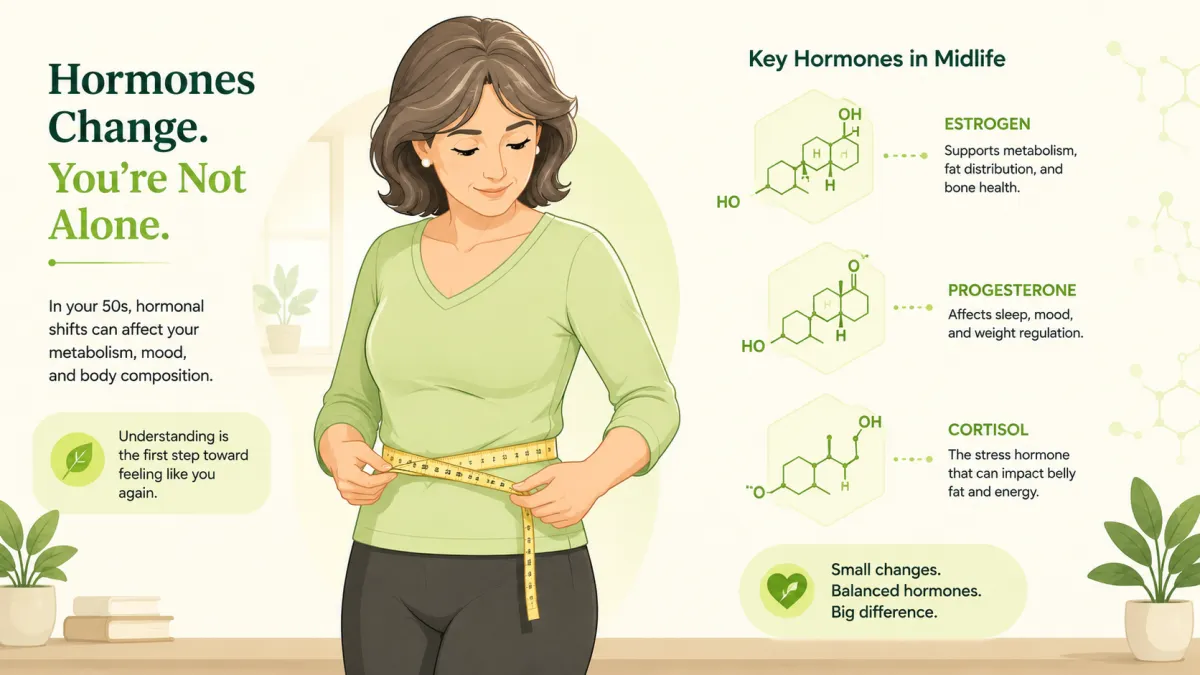
If you are gaining weight during menopause especially around your abdomen despite eating well and staying active, you are not alone and it is not your fault. The primary drivers are declining estrogen and progesterone, which change how your body stores fat and slow your metabolism. Additional factors include muscle loss, insulin resistance, poor sleep, and elevated cortisol from stress. The result is often a frustrating shift in body composition called "menopause belly" or "menopot," where fat redistributes from hips and thighs to the midsection.
Introduction
You are doing everything right. You are eating well, exercising, getting enough sleep and yet, when you step on the scale, the numbers keep creeping up. If this sounds familiar, you are in good company. For the overwhelming majority of mid-life women, the long transition into menopause means weight gain, particularly visceral fat that accumulates in the belly.
This is not simply about willpower or making the "wrong" food choices. It is the result of shifting hormones, a slowing metabolism, and the natural changes that come with age. This article explores why menopause weight gain happens and what you can do about it.
What Is Menopause Belly?
Menopause belly sometimes called "menopot" describes the waistline expansion or sudden appearance of fat around the middle that affects many women beginning in their 40s. Research shows that waist circumference increases by 5 to 7 cm (about 2 to 2.8 inches) during the menopause transition, whether or not women gain overall weight.
This fat redistribution is not just a cosmetic concern. Abdominal fat, particularly visceral fat stored around internal organs, is linked to higher risks of cardiovascular disease, diabetes, and certain cancers.
Why Does Menopause Cause Weight Gain?
Declining Estrogen
Estrogen plays a major role in regulating metabolism, fat distribution, and insulin sensitivity. Before menopause, estrogen encourages fat storage in the hips and thighs the "gynoid" fat pattern. As estrogen levels drop, the body shifts toward storing more fat around the abdomen, known as "android" or visceral fat.
Estrogen also helps maintain insulin sensitivity. When estrogen declines, women are at higher risk for insulin resistance, making it harder to regulate blood sugar and more likely to store fat.
Progesterone Decline
Progesterone helps regulate metabolism and has a natural diuretic effect. When progesterone drops often before estrogen declines women may experience:
Increased water retention and bloating
Slower metabolic rate
Changes in how the body stores fat
Increased cortisol sensitivity, promoting abdominal fat storage
Muscle Loss and Metabolic Slowdown
Women begin to naturally lose muscle mass at a rate of 3% to 8% once they hit 30. Because muscle burns more calories than fat, less muscle means a slower metabolism. This metabolic slowdown means you need fewer calories to maintain your weight, and if your intake does not adjust, weight gain follows.
Sleep Disruption and Stress
Menopause symptoms like night sweats and hot flashes can disrupt sleep, which affects appetite-regulating hormones and increases cortisol. Higher cortisol levels promote abdominal fat storage and can drive cravings for sugary, calorie-dense foods.
Insulin Resistance
Estrogen influences insulin sensitivity. As estrogen declines, insulin resistance can develop, leading to higher blood sugar levels and increased fat storage particularly around the belly. This creates a cycle where abdominal fat further increases insulin resistance.
How Much Weight Gain Is Normal?
Research shows that:
Women gain about 1.5 kg (3.3 lbs) during the menopause transition, with fat mass increasing sharply beginning 2-3 years before the final menstrual period
Other studies show about 0.5 kg (1.1 lbs) per year during the transition, adding up to about 10 pounds over time
Many women gain 5 to 10 pounds during perimenopause
It is important to note that these are averages. Weight gain varies significantly between individuals based on genetics, lifestyle, and other factors.
When to See a Provider About Menopause Weight Gain
You should consider a medical evaluation if:
You are gaining weight despite healthy diet and exercise habits
You have other symptoms like hot flashes, night sweats, or mood changes
You are concerned about your metabolic health or cardiovascular risk
You want to understand whether hormone therapy or other treatments might be right for you
What Labs Should Be Checked for Menopause Weight Gain?
A thorough evaluation typically includes:
Thyroid panel (TSH, Free T4, Free T3) to rule out hypothyroidism, which can mimic menopausal symptoms
Fasting glucose and insulin to assess for insulin resistance
Hemoglobin A1c to check for prediabetes or diabetes
Lipid panel to assess cardiovascular risk
Estrogen and progesterone levels
Testosterone which also declines with age and affects muscle mass
Cortisol if chronic stress is suspected
Vitamin D important for bone health and metabolism
The right tests depend on your individual symptoms and medical history. A provider can help determine which labs are appropriate for you.