Why Am I Gaining Weight Only in My Midsection? | Primary Wellness NY
Why Am I Gaining Weight Only in My Midsection? Causes and What to Check
Quick Answer
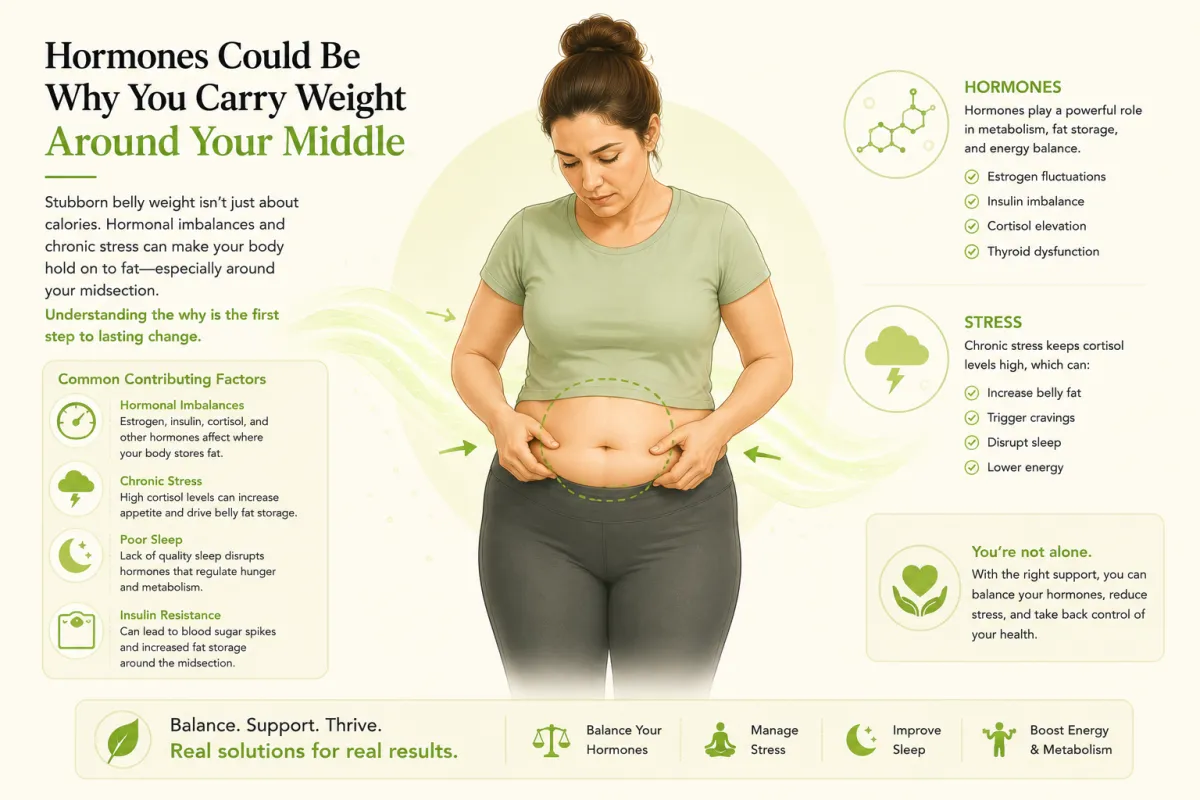
Gaining weight around your midsection while the rest of your body stays relatively unchanged is frustrating and it is often a sign that something is off hormonally or metabolically. The most common culprits are insulin resistance, where your body overproduces insulin and stores fat centrally , elevated cortisol from chronic stress, which triggers fat storage in the abdomen , perimenopause and menopause, where declining estrogen changes fat distribution , and low testosterone, which can reduce muscle mass and promote belly fat . This pattern of fat accumulation, known as central obesity, is not just a cosmetic concern it is linked to higher risks of cardiovascular disease, diabetes, and metabolic syndrome.
Introduction
You step on the scale and the number has not changed much. But when you look in the mirror or put on your favorite jeans, you notice something different: your midsection is expanding. Your arms and legs look the same, but your belly is growing.
This is one of the most common and most frustrating patterns of weight gain, especially for people in their 40s and 50s. And it is not just about getting older. Midsection weight gain is often a sign of hormonal or metabolic changes that are treatable once identified. This article explores the most common causes and what you can do about them.
Insulin Resistance: The Fat-Storage Hormone
Insulin is not just a blood sugar hormone it is also a fat-storage hormone. When your cells become resistant to insulin, your body produces more of it to compensate. High insulin levels signal your body to store fat, and they particularly favor storage around the abdomen .
This pattern is common in people with prediabetes, type 2 diabetes, or metabolic syndrome. If you are gaining weight around your middle along with low energy after meals, sugar cravings, or skin changes like darkened patches on your neck or armpits, insulin resistance is a strong possibility .
Cortisol and Chronic Stress
When you are under chronic stress, your body produces elevated levels of cortisol. This stress hormone actively promotes fat storage in the midsection and face . Belly fat tissue is especially sensitive to cortisol, with higher receptor expression that makes it absorb and store fat more readily than other areas.
Cushing's syndrome a rare condition marked by chronically elevated cortisol causes a distinctive pattern of weight gain: a round, red "moon face," a fatty hump between the shoulders, a large trunk with relatively thin arms and legs, and purple stretch marks on the abdomen . The syndrome affects women up to five times as often as men .
Even without full Cushing's syndrome, everyday chronic stress can drive cortisol levels high enough to promote belly fat accumulation.
Perimenopause and Menopause: The Hormonal Shift
For women, the hormonal changes of perimenopause and menopause are a major driver of midsection weight gain. Declining estrogen changes where and how the body stores fat, leading to a tendency for fat to accumulate around the midsection . This is sometimes called "menopause belly."
Research shows that hypoosstrogenaemia (low estrogen) during perimenopause is associated with increased total and abdominal fat, along with lower lean body mass . Women gain about 0.5 kg (1.1 lbs) per year during the transition, and much of this weight is deposited in the abdomen .
Progesterone, which helps regulate metabolism, also declines, and a lack of progesterone can trigger an increase in fat storage . Testosterone also drops during this transition, further affecting muscle mass and metabolism .
Low Testosterone
Testosterone helps build muscle and keep metabolism running well. When testosterone levels are low, a man might lose some muscle and gain extra fat, especially around the belly . This change in body composition can lead to weight gain over time.
The relationship works both ways low testosterone promotes belly fat, and excess belly fat further lowers testosterone through a process where fat tissue converts testosterone into estrogen. This cycle can be difficult to break without medical evaluation .
When to See a Provider
You should consider a medical evaluation if you are gaining weight around your midsection despite healthy lifestyle habits. If you also experience fatigue, brain fog, sleep problems, mood changes, or menstrual changes, these can provide important clues. If you have risk factors for insulin resistance, thyroid disorders, or chronic stress, evaluation is especially important.
What Labs Should Be Checked?
A thorough evaluation typically includes:
Fasting glucose and insulin to assess for insulin resistance
Hemoglobin A1c to check for prediabetes or diabetes
Lipid panel to check cholesterol and triglycerides
Cortisol if chronic stress or Cushing's is suspected
Thyroid panel (TSH, Free T4, Free T3) to rule out thyroid dysfunction
Testosterone (total and free for both men and women)
Estrogen and progesterone for women in perimenopause or menopause
The right tests depend on your individual symptoms, medical history, and risk factors. A provider can help determine which labs are appropriate for you.