Why Am I Still Tired After 8 Hours of Sleep? | Primary Wellness NY
Why Am I Still Tired After 8 Hours of Sleep? Hormone and Metabolic Causes to Check
Quick Answer
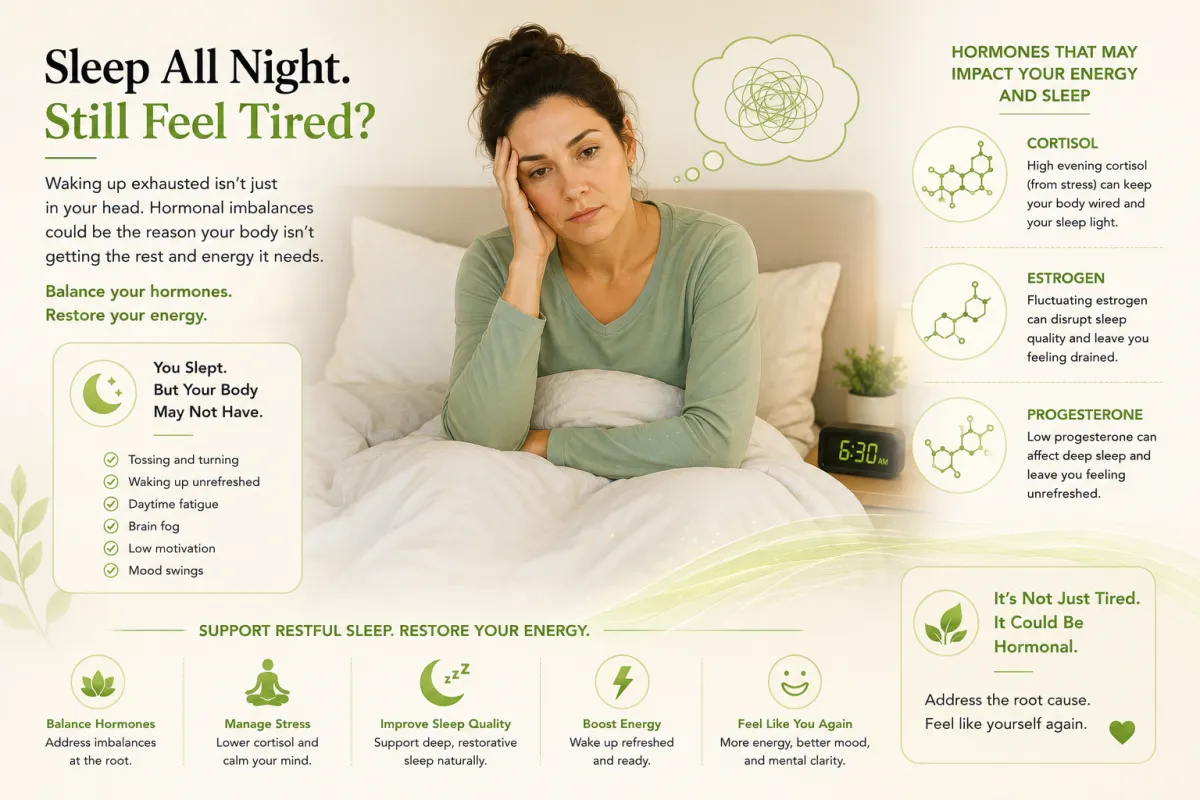
Waking up exhausted after eight hours of sleep is a frustrating experience that affects many people, particularly women in their 40s and 50s. While you are getting enough sleep in terms of duration, the quality of your sleep may be compromised by underlying hormonal and metabolic issues . The most common causes include hormonal changes during perimenopause that disrupt sleep architecture, insulin resistance and blood sugar instability that trigger nighttime cortisol surges, sleep apnea which fragments sleep without you remembering, and chronic stress which elevates cortisol and interferes with restorative sleep . These conditions prevent your body from completing the deep, restorative sleep cycles necessary for waking up refreshed. A thorough medical evaluation can help identify what is truly draining your energy.
Introduction
You go to bed at a reasonable hour. You sleep through the night or at least you think you do. You wake up after eight hours and still feel like you have barely rested. Your eyes are heavy, your body aches, and you are already counting the hours until you can go back to bed.
If this sounds familiar, you are not alone. And more importantly, you are not broken. Persistent fatigue despite adequate sleep is a common sign that something deeper is going on. Often, the culprit is not the amount of sleep you are getting, but the quality of that sleep and hormonal and metabolic imbalances are frequent drivers of poor sleep quality.
Why Sleep Duration Is Not the Same as Sleep Quality
Sleep is not just a single state it is a dynamic process involving different stages, including light sleep, deep sleep, and REM sleep . Each stage plays a different role in restoring your body and brain. Deep sleep is when physical restoration happens. REM sleep is when your brain processes memories and emotions.
When your sleep is fragmented meaning you wake up briefly many times during the night you may not notice the awakenings, but your body cannot complete enough deep and REM sleep cycles . This is why you can sleep eight hours and still feel exhausted. The fatigue feels fundamentally different from ordinary tiredness: not resolved by sleep, not proportional to exertion, present even after a full night of rest .
Hormonal Causes of Non-Restorative Sleep
Perimenopause and Menopause
For women, the hormonal changes of perimenopause are one of the most significant drivers of poor sleep quality. Progesterone has a natural calming effect on the nervous system and supports sleep continuity. As progesterone declines, that GABAergic effect is lost, making it harder to fall and stay asleep . Estrogen volatility disrupts temperature regulation overnight, which can trigger hot flashes and night sweats that jolt you out of deep sleep . Blood sugar instability can trigger cortisol surges at 2 to 3 AM that wake women in the second half of the night . The result is sleep that looks adequate in duration but is fragmented and non-restorative.
One way to tell if hormones are driving your fatigue is the pattern. If you sleep well some weeks and poorly others, and the pattern follows your menstrual cycle, that is a strong signal that the drivers are hormonal . The late luteal phase, when both estrogen and progesterone are at their lowest, tends to be when fatigue peaks.
Cortisol Dysregulation
Your body produces cortisol as part of its stress response. Normally, cortisol follows a daily rhythm: higher in the morning to wake you up and lower at night to let you sleep. When stress is chronic, this rhythm can become disrupted . The result can be cortisol patterns that are dysregulated too high at the wrong times, contributing to fatigue rather than energy . Cortisol surges in the middle of the night can wake you up, and even if you do not fully wake, the spike can shift you into a lighter, less restorative stage of sleep.
Metabolic Causes of Poor Sleep Quality
Insulin Resistance and Blood Sugar Instability
Blood sugar plays a major role in sleep quality. When blood sugar is volatile spiking after meals and then dropping sleep tends to be volatile too . This can manifest as waking up in the middle of the night, often around 2 to 3 AM, when a drop in blood sugar triggers a cortisol spike .
The pattern is often telling :
Sharper in the morning before eating
Foggier after lunch
Worse in the late afternoon when blood sugar dips
Worse in the week before the period, when both estrogen and progesterone are at their lowest
Better in the follicular phase when estrogen is rising and insulin sensitivity is higher
This pattern of cognitive and energy performance that fluctuates with metabolic state is not psychological it is physiological .
Sleep Apnea
Sleep apnea is a condition where breathing repeatedly stops and starts during sleep. It causes your sleep to be fragmented, even if you do not remember waking up. This means you never get enough deep, restorative sleep. Sleep apnea is significantly underdiagnosed in women because women often do not present with the classic loud snoring associated with the condition in men. Instead, women are more likely to report fatigue, morning headaches, and difficulty concentrating.
Estrogen and Cellular Energy
Estrogen appears to support mitochondrial function the energy production capacity of individual cells . As estrogen becomes less stable, the efficiency of cellular energy metabolism may decline. This contributes to the quality of fatigue women describe: not sleepy, but depleted . Even if you are getting sleep, your cells may not be producing energy effectively.
When to See a Provider
You should consider a medical evaluation if you are waking up exhausted despite sleeping eight or more hours. If your sleep and energy levels vary with your menstrual cycle, this pattern is a strong signal that hormones are involved. If you also have symptoms like brain fog, weight changes, mood changes, or hot flashes, evaluation is especially important.
What Labs Should Be Checked?
A thorough evaluation typically includes:
Estrogen and progesterone to assess hormone levels, especially for women in perimenopause
Fasting glucose and insulin to assess for insulin resistance
Hemoglobin A1c to check for prediabetes or diabetes
Thyroid panel (TSH, Free T4, Free T3) to rule out thyroid dysfunction
Cortisol to assess stress hormone patterns
Complete blood count (CBC) to check for anemia
Vitamin D, B12, and iron studies to check for nutritional deficiencies that can affect sleep and energy
The right tests depend on your individual symptoms, medical history, and risk factors. A provider can help determine which labs are appropriate for you.