Why Do I Wake Up at 3 AM and Can't Fall Back Asleep? | Primary Wellness NY
Why Do I Wake Up at 3 AM and Can't Fall Back Asleep? Hormonal and Metabolic Causes
Quick Answer
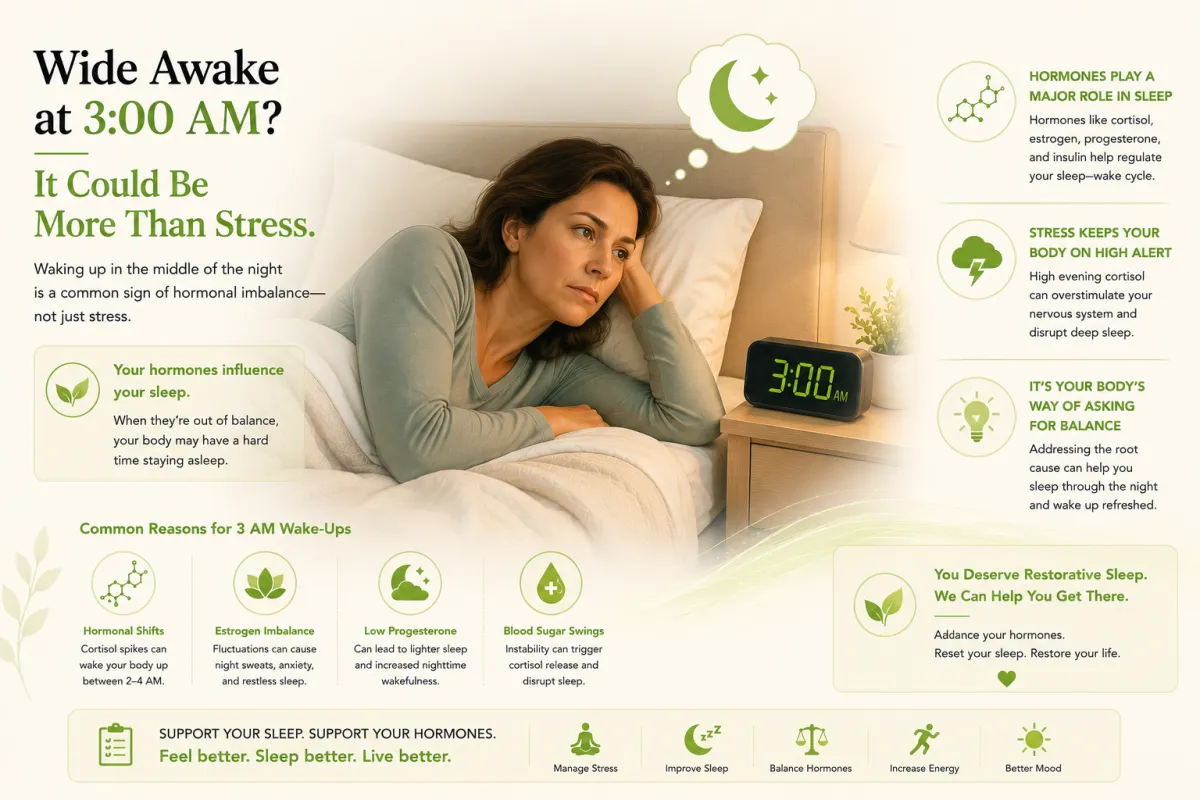
Waking up at 3 AM with a racing heart, feeling anxious, or unable to fall back asleep is a common and frustrating experience, especially for women in their 40s and 50s. This pattern is often driven by hormonal shifts, particularly declining progesterone and estrogen during perimenopause, which disrupt sleep architecture and temperature regulation . Blood sugar instability can trigger cortisol surges that jolt you awake in the middle of the night . Chronic stress keeps cortisol levels elevated, preventing the nervous system from settling into deep, restorative sleep . Additionally, undiagnosed sleep apnea frequently presents in women as insomnia and fragmented sleep rather than loud snoring . These factors create a cycle where poor sleep worsens hormone balance, and hormone imbalance further disrupts sleep.
Introduction
You fall asleep easily, but without fail, you wake up in the middle of the night often around 3 AM. Your heart might be racing, your mind starts spinning, and you cannot seem to drift back to sleep. You lie there, watching the clock tick, knowing you will be exhausted in the morning.
If this sounds familiar, you are experiencing a specific type of sleep disruption that is frustratingly common, particularly during perimenopause and midlife. The good news is that this pattern is not random. It is often driven by identifiable hormonal and metabolic factors that can be addressed once they are identified.
The Hormone-Sleep Connection
Sleep and hormones are in constant bidirectional communication. Cortisol, melatonin, estrogen, progesterone, and insulin all follow rhythms tied to the sleep-wake cycle . When these rhythms are disrupted whether by stress, perimenopause, or lifestyle factors hormonal output is affected, and sleep quality suffers .
This is why treating sleep problems in isolation may miss the root cause: your body restores hormonal balance during sleep, and if that window is impaired, your hormones stay out of sync .
Why Progesterone and Estrogen Matter for Sleep
Progesterone has a natural calming effect on the nervous system. It supports sleep continuity and helps you stay asleep through the night. As progesterone declines in perimenopause, its sedative, GABAergic effect is lost, making it harder to fall asleep and stay asleep .
Estrogen supports serotonin and melatonin production, which are essential for mood, sleep, and energy stability . Estrogen also plays a role in mitochondrial function, helping cells produce energy efficiently . When estrogen levels become volatile during perimenopause, temperature regulation can be disrupted, triggering night sweats that jolt you out of deep sleep .
Research also shows that estrogen depletion can significantly impact energy metabolism in muscle tissue through a BDNF-dependent mechanism . This means declining estrogen affects not just sleep, but how your body produces energy at the cellular level, contributing to the fatigue that often accompanies midlife sleep disruption.
Cortisol and the 3 AM Wake-Up Call
Your body's stress hormone, cortisol, normally follows a daily rhythm: higher in the morning to wake you up and lower at night to let you sleep. When stress is chronic, this rhythm can become disrupted, leading to cortisol patterns that are too high at the wrong times .
For many people, a cortisol surge around 2 to 3 AM is the reason they wake up and cannot get back to sleep . Even if you do not fully wake, the spike can shift you into a lighter, less restorative stage of sleep. Researchers have found that in menopausal women, worse sleep architecture is associated with higher cortisol levels even when women do not self-report insomnia or sleepiness .
The pattern of "wired and tired" exhausted during the day but restless at night often points to cortisol dysregulation .
Blood Sugar Instability and Nighttime Waking
When your blood sugar drops overnight, your body releases cortisol and adrenaline to bring it back up. This can wake you up, often around 2 to 3 AM . Even minor swings in nighttime blood sugar can disrupt deep sleep and leave you drained the next day .
A dinner heavy in carbohydrates, sugar, or alcohol is a common culprit . If you are waking up at 3 AM with a racing heart, blood sugar instability is worth considering.
Sleep Apnea: The Silent Disrupter
Undiagnosed sleep apnea is significantly underrecognized in women because it often presents differently than the classic symptoms associated with the condition in men. Women are more likely to experience insomnia, broken sleep, morning headaches, fatigue, depression, and anxiety rather than loud snoring and gasping . In fact, up to 40% of women with sleep apnea do not report the hallmark symptoms of the condition .
A recent study of over 500 adults with moderate-to-severe sleep apnea found that women reported significantly worse symptoms than men, despite having very similar measures of sleep apnea severity . Women were more likely to experience frequent headaches, nightmares, nighttime urination, fatigue, anxiety, sleep disturbance, cognitive difficulties, and impaired daytime functioning .
If you are waking up at 3 AM, experiencing morning headaches, or feeling exhausted despite what you think is a full night's sleep, sleep apnea screening may be worth discussing with a provider .
What Labs Should Be Checked?
A thorough evaluation typically includes:
Estrogen and progesterone to assess hormone levels, especially for women in perimenopause
Fasting glucose and insulin to assess for insulin resistance and blood sugar instability
Hemoglobin A1c to check for prediabetes or diabetes
Cortisol to assess stress hormone patterns
Thyroid panel (TSH, Free T4, Free T3) to rule out thyroid dysfunction
Iron studies with ferritin to check for iron deficiency
Vitamin D and B12 to check for nutritional deficiencies that can affect sleep
The right tests depend on your individual symptoms and medical history. A provider can help determine which labs are appropriate for you.
When to See a Provider
You should consider a medical evaluation if you wake up in the middle of the night with a racing heart or anxiety, experience persistent fatigue despite sleeping adequate hours, have frequent night sweats or hot flashes, or snore or wake with morning headaches. If you are in perimenopause or menopause and your sleep has become disrupted, hormone evaluation is especially important.