Why Is My Face and Belly Getting Bigger But Not My Arms? Causes and What to Check
Why Is My Face and Belly Getting Bigger But Not My Arms? Causes and What to Check
Quick Answer
If you are noticing weight gain in your face and belly while your arms and legs stay relatively lean, this unusual pattern of fat distribution is often a red flag for a hormonal issue. The most common causes include elevated cortisol from chronic stress or Cushing's syndrome, PCOS where insulin resistance drives central weight gain, and hormonal changes during perimenopause or menopause. Cushing's syndrome a condition where the body produces too much cortisol specifically causes fat to accumulate in the face (creating a round "moon face") and around the midsection, with thinning of the arms and legs. This pattern is not normal weight gain and warrants a medical evaluation.
Introduction
You look in the mirror and notice something strange. Your face looks fuller, even rounder. Your belly is expanding. But your arms and legs look the same or maybe even thinner than before. The weight seems to be going only to specific places.
This pattern of weight distribution is not typical. When fat accumulates disproportionately in the face and midsection while sparing the limbs, it is often a sign that hormones not just diet or exercise are driving the change. Understanding what is happening can help you get the right evaluation and treatment.
Cushing's Syndrome: The Classic Pattern
Cushing's syndrome is a hormonal disorder caused by prolonged exposure to high levels of cortisol your body's primary stress hormone. It is rare, affecting about 1 in 5 million people, but it produces a very distinctive pattern of weight gain that exactly matches what you are describing.
The classic Cushing's appearance includes:
A round, red, full face often called a "moon face"
Fat accumulation around the midsection
Thin arms and legs (muscle wasting)
A fatty hump between the shoulders (buffalo hump)
Purple stretch marks on the abdomen
Easy bruising and thin skin
This pattern happens because cortisol promotes fat storage in the face and trunk while breaking down muscle tissue in the limbs. The condition can be caused by prolonged use of corticosteroid medications or by tumors that cause the body to overproduce cortisol.
PCOS and Insulin Resistance
For women, polycystic ovary syndrome (PCOS) is one of the most common causes of unusual weight distribution. PCOS affects up to 10% to 13% of women of reproductive age. It is characterized by hormonal imbalances, including higher levels of male hormones called androgens, and insulin resistance.
In PCOS, insulin resistance drives fat storage around the abdomen, creating what is often called a "PCOS belly." The midsection becomes round and firm due to visceral fat accumulation around the internal organs. Meanwhile, the arms and legs may remain relatively lean. This pattern can occur even when overall body mass index remains normal.
Beyond belly weight, PCOS often brings irregular periods, acne, excess facial or body hair, and difficulty getting pregnant. If you are experiencing these symptoms alongside midsection weight gain, PCOS is worth discussing with a provider.
Perimenopause and Menopause
For women in their 40s and 50s, hormonal changes during perimenopause and menopause can shift where fat is stored. Declining estrogen levels cause the body to store more fat around the abdomen rather than the hips and thighs. This can create a midsection-focused weight gain pattern.
Sleep disruption and stress during this transition can elevate cortisol levels, further contributing to abdominal fat accumulation. The combination of hormonal shifts and lifestyle factors can make this pattern more pronounced.
Chronic Stress and Cortisol
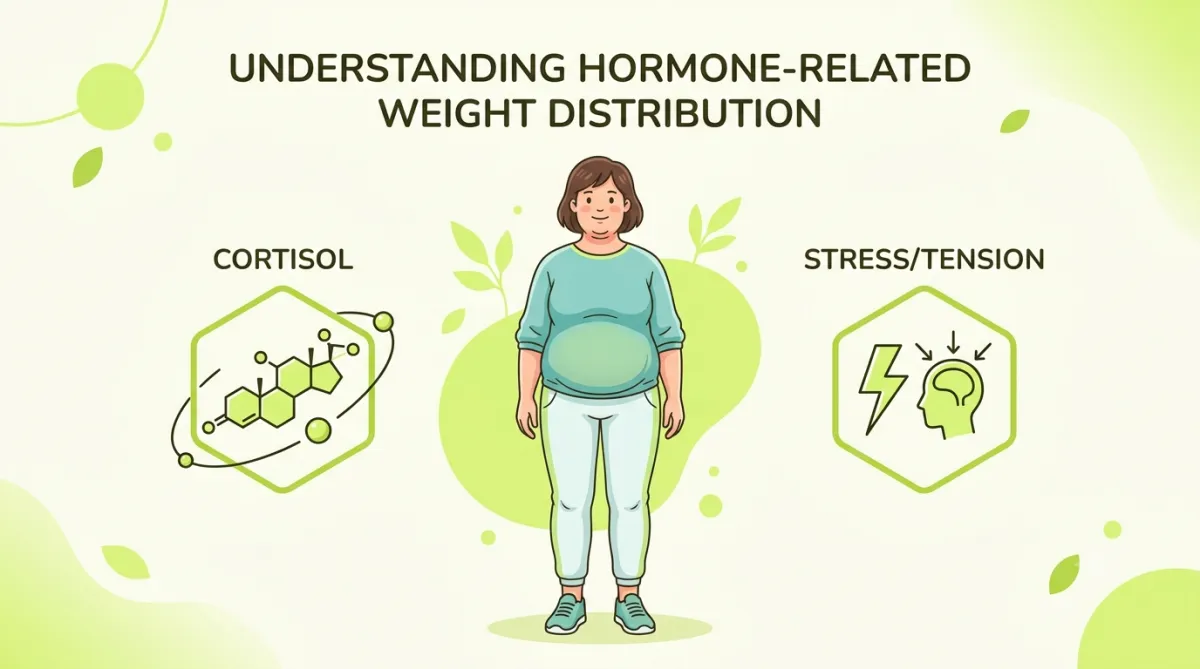
Even without full Cushing's syndrome, chronic everyday stress can elevate cortisol levels enough to shift fat distribution. Cortisol encourages fat storage in the midsection and can cause facial puffiness. This is sometimes called "stress belly" or "hormonal belly."
Belly fat tissue is especially sensitive to cortisol, with higher receptor expression that makes it absorb and store fat more readily than other areas. Elevated cortisol also breaks down muscle tissue, which can contribute to thinner limbs while the midsection expands.
When to See a Provider
You should consider a medical evaluation if you are gaining weight in your face and belly while your arms and legs stay lean. If you also have other symptoms like a round, red face, purple stretch marks, or a hump between your shoulders, prompt evaluation is important. If you experience irregular periods, excess hair growth, or severe acne along with midsection weight gain, PCOS could be the cause.
What Labs Should Be Checked?
A thorough evaluation for unusual weight distribution typically includes:
Cortisol levels including blood, urine, and saliva tests to assess for Cushing's syndrome
Fasting glucose and insulin to assess for insulin resistance
Hemoglobin A1c to check for prediabetes or diabetes
Androgen levels including testosterone and DHEA-S
Thyroid panel (TSH, Free T4, Free T3)
Estrogen and progesterone for women in perimenopause or menopause
The right tests depend on your individual symptoms and medical history. A provider can help determine which labs are appropriate for you.