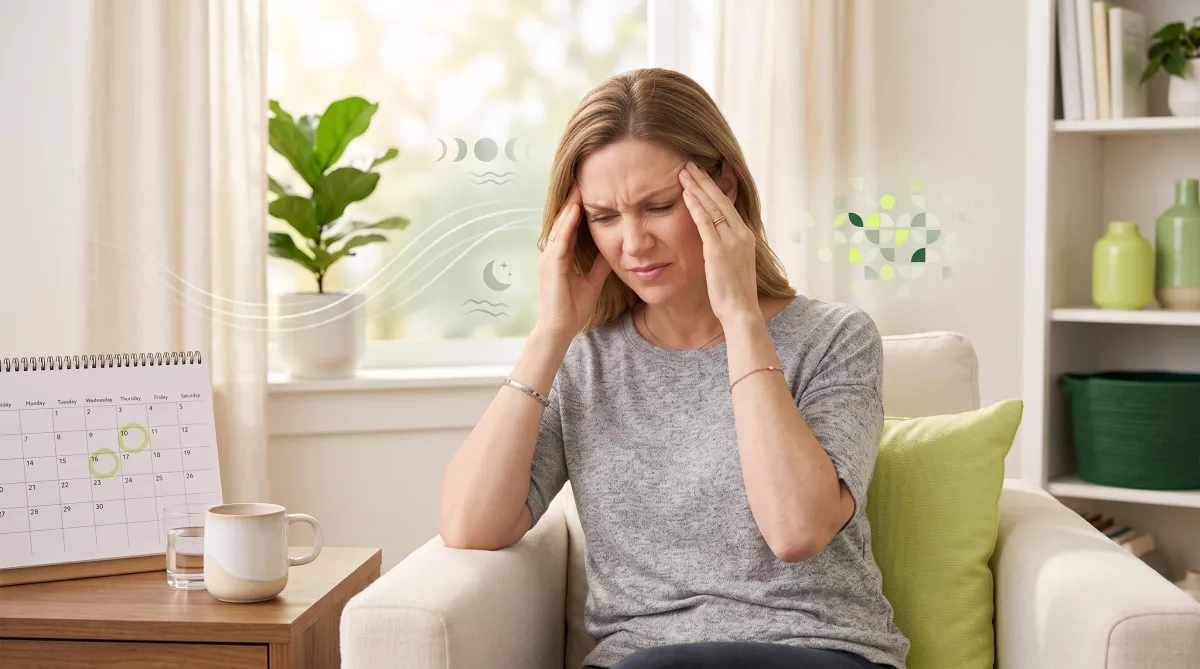
Can Perimenopause Cause Headaches? What to Know
Can Perimenopause Cause Headaches?
Yes. Perimenopause can be associated with new or changing headaches, including worsening migraine symptoms.
As reproductive hormones fluctuate during the menopause transition, some women notice that headaches become more frequent, more intense, or occur at different times than they did previously.
The Menopause Society notes that fluctuating estrogen levels during perimenopause may increase hormone-related headaches and migraines in some women.
But a new headache is not automatically a "hormonal headache."
Stress, dehydration, poor sleep, skipped meals, medications, vision problems, high blood pressure, infections, and neurological conditions can also cause headaches.
That is why a significant change in your headache pattern deserves attention rather than simply being attributed to menopause.
Quick Answer: Why Are My Headaches Worse in My 40s?
If headaches have become more frequent or intense during your 40s, possible contributors include:
Perimenopausal hormone fluctuations
Changes in estrogen levels
Poor sleep
Night sweats or hot flashes
Stress
Skipping meals
Dehydration
Caffeine changes
Medication changes
Migraine
Vision problems
Other medical conditions
Perimenopause may be part of the explanation, particularly when headaches occur alongside changing periods, hot flashes, night sweats, sleep disruption, or other menopause symptoms.
However, new, severe, sudden, or unusual headaches should be medically evaluated.
What Is a Hormonal Headache?
"Hormonal headache" is a general term used when headache symptoms appear to be associated with changes in reproductive hormones.
Some women notice headaches at particular points in their menstrual cycle.
During perimenopause, hormonal fluctuations can become less predictable, which may change previously familiar headache patterns.
For women who already experience migraine, this transition can be particularly noticeable.
The Menopause Society describes migraine as moderate-to-severe headache that may involve throbbing or pulsating pain and can be accompanied by nausea, vomiting, or sensitivity to light or sound.
The important point is that hormone fluctuations may be one contributor, not necessarily the only cause.
Why Can Perimenopause Affect Headaches?
Perimenopause involves changing ovarian hormone activity.
Estrogen levels can fluctuate substantially rather than declining in a perfectly steady pattern.
For some women, these changes may affect migraine or headache patterns.
This can create a frustrating experience:
Your headaches may become unpredictable at the same time your menstrual cycles become unpredictable.
You might notice that:
A headache appears before your period
Migraines last longer than before
Headaches become more frequent
Your usual headache triggers seem stronger
Headaches occur at unexpected points in your cycle
The Menopause Society specifically notes that estrogen fluctuations during perimenopause may cause hormone-related headaches to increase.
Can Perimenopause Cause Migraines for the First Time?
It is possible for migraine patterns to change during the menopause transition.
However, a new migraine-like headache in midlife should not automatically be assumed to be caused by menopause.
A healthcare professional may need to consider other causes, particularly when the headache is substantially different from anything you've experienced before.
This distinction matters because "hormonal" should describe a pattern supported by the clinical picture—not simply become an explanation for every headache occurring after 40.
What Does a Perimenopause Headache Feel Like?
There isn't one specific type of "perimenopause headache."
Some women may experience a conventional tension-type headache.
Others may experience migraine symptoms such as:
Moderate or severe head pain
Pulsating or throbbing pain
Nausea
Vomiting
Sensitivity to light
Sensitivity to sound
Increased symptoms with physical activity
Some headaches may occur without the classic migraine features.
The symptoms and pattern matter more than simply labeling the headache as hormonal.
Why Are My Headaches Worse Before My Period?
Hormonal fluctuations around the menstrual cycle can influence migraine in some women.
During perimenopause, menstrual cycles may become irregular, making these patterns harder to predict.
You might find that:
Your cycle is shorter than it used to be
Your cycle is longer
You occasionally skip a period
Your bleeding changes
Your headaches no longer occur at the same point in the cycle
Tracking both your periods and headaches can help reveal whether there is a relationship.
The Menopause Society recommends tracking menstrual changes because cycle patterns can become an important part of understanding the menopause transition.
Can Hot Flashes Cause Headaches?
Hot flashes don't necessarily directly cause headaches, but they can contribute to circumstances that make headaches more likely.
For example, hot flashes and night sweats can disrupt sleep.
Poor sleep can then increase fatigue and make existing headache or migraine symptoms more difficult to manage.
Hot flashes can also be accompanied by sweating, anxiety, and a rapid heartbeat in some women.
If headaches, hot flashes, and sleep problems all appeared around the same time, mention the entire pattern during your medical evaluation.
Can Poor Sleep Make Perimenopause Headaches Worse?
Yes.
Sleep disruption is common during perimenopause and may occur because of:
Night sweats
Hot flashes
Anxiety
Stress
Changes in sleep patterns
Waking during the night
The NHS lists sleep problems and headaches or migraines that are worse than usual among symptoms that can occur during perimenopause and menopause.
If you're sleeping poorly and experiencing more headaches, both issues should be considered.
Treating only the headache may not address the factors contributing to the overall pattern.
Can Stress Cause Headaches During Perimenopause?
Yes.
Stress is a common headache trigger.
And midlife can bring substantial demands involving work, family, finances, relationships, and caregiving.
Perimenopause can add another layer through physical symptoms, sleep disruption, and uncertainty about changing menstrual cycles.
This means that a headache may have multiple overlapping triggers.
For example:
Hormonal fluctuation + poor sleep + stress + dehydration
may create a very different headache pattern than any one factor alone.
Can Dehydration or Skipping Meals Cause Headaches?
Yes.
Not drinking enough fluids and going too long without eating can contribute to headaches.
This can become more common when you're busy, dieting, exercising heavily, or dealing with nausea or appetite changes.
Simple habits can help:
Drink fluids consistently throughout the day.
Avoid routinely skipping meals.
Pay attention to headaches that occur after long periods without food.
Be cautious with excessive caffeine.
Maintain regular sleep as much as possible.
These steps don't prove that your headaches are caused by lifestyle factors, but they can help identify potential triggers.
Can Caffeine Affect Headaches?
Caffeine can affect headaches differently from person to person.
For some people, caffeine is part of their headache or migraine management strategy.
For others, excessive caffeine or sudden changes in caffeine intake may contribute to headaches.
If your headache pattern changed after substantially increasing or decreasing caffeine, record that information.
Avoid making large medication or supplement changes without discussing them with an appropriate healthcare professional.
Should I Get My Hormones Tested for Headaches?
Not necessarily.
A headache by itself does not automatically indicate a hormone problem.
If you're in your 40s and experiencing a combination of:
Changing menstrual cycles
Hot flashes
Night sweats
Sleep problems
Vaginal symptoms
Mood changes
New or changing headaches
a clinician may consider whether you're experiencing perimenopause.
Hormone testing may or may not be useful depending on your age, symptoms, menstrual history, medications, and other medical factors.
The goal should be to evaluate the whole clinical picture rather than order hormone tests simply because you have headaches.
Can Hormone Therapy Help Perimenopause Headaches?
This is more complicated than simply saying "yes" or "no."
Hormone therapy can be highly effective for certain bothersome menopause symptoms, particularly vasomotor symptoms such as hot flashes and night sweats, in appropriately selected patients.
But hormone therapy can affect headaches differently depending on the individual, the type of headache, and the hormone regimen.
For someone considering hormone therapy, the clinician may need to consider:
Migraine history
Whether aura is present
Age
Cardiovascular risk
Blood-clot risk
Smoking status
Other medical conditions
Current medications
The type and route of hormone therapy
Hormone therapy should therefore not be started specifically for headaches without an individualized evaluation.
Primary Wellness NY provides information about hormone therapy for women in New York.
What Is the Difference Between a Headache and a Migraine?
A migraine is more than simply a bad headache.
Migraine may involve:
Moderate-to-severe pain
Throbbing or pulsating pain
Nausea or vomiting
Light sensitivity
Sound sensitivity
Symptoms that worsen with activity
Some people also experience an aura before or during a migraine.
Aura can involve temporary neurological symptoms such as visual disturbances, sensory changes, or speech difficulties.
If you develop new neurological symptoms with headaches, particularly for the first time, medical evaluation is important.
When Should You See a Healthcare Provider About Headaches?
Talk with a healthcare professional if:
Your headaches have become more frequent.
Your headaches are stronger than they used to be.
You are experiencing new headaches in your 40s.
Your headache pattern has changed significantly.
Headaches are interfering with work or daily life.
You regularly need medication for headaches.
Headaches are waking you from sleep.
You experience headaches alongside other new health symptoms.
A headache diary can be useful.
Record:
Date
Time
Severity
Duration
Location
Menstrual-cycle day
Sleep quality
Food intake
Hydration
Caffeine
Stress
Other symptoms
Medications taken
Patterns can be surprisingly informative.
When Is a Headache an Emergency?
Most headaches are not emergencies.
But certain headache patterns require urgent medical attention.
Seek emergency care for a headache that:
Begins suddenly and is extremely severe
Occurs with weakness or numbness
Causes difficulty speaking
Causes loss of vision
Occurs with confusion or severe drowsiness
Is accompanied by a seizure
Occurs with a severe stiff neck and fever
Follows a significant head injury
These symptoms should not be assumed to be caused by perimenopause.
The NHS similarly recommends emergency assessment for sudden, extremely painful headaches and headaches accompanied by neurological symptoms such as weakness, speech difficulty, confusion, or loss of vision.
What Can You Do to Track Perimenopause Headaches?
A headache diary can help you identify patterns.
For at least several weeks, record:
Headache information
When it started
How long it lasted
Severity
Location
Associated symptoms
Hormonal information
Period start date
Bleeding changes
Hot flashes
Night sweats
Lifestyle information
Sleep
Stress
Meals
Hydration
Caffeine
Alcohol
Exercise
This information can help your healthcare provider determine whether your headaches appear to follow a hormonal or lifestyle pattern.
Can Headaches Improve After Menopause?
They can.
The Menopause Society notes that some women find hormone-related headaches improve once menopause is reached. However, not everyone experiences the same pattern, and some women continue to have headaches after menopause.
There is no guarantee that headaches will disappear simply because menstrual periods stop.
If headaches remain frequent or disruptive after menopause, they still deserve appropriate evaluation.