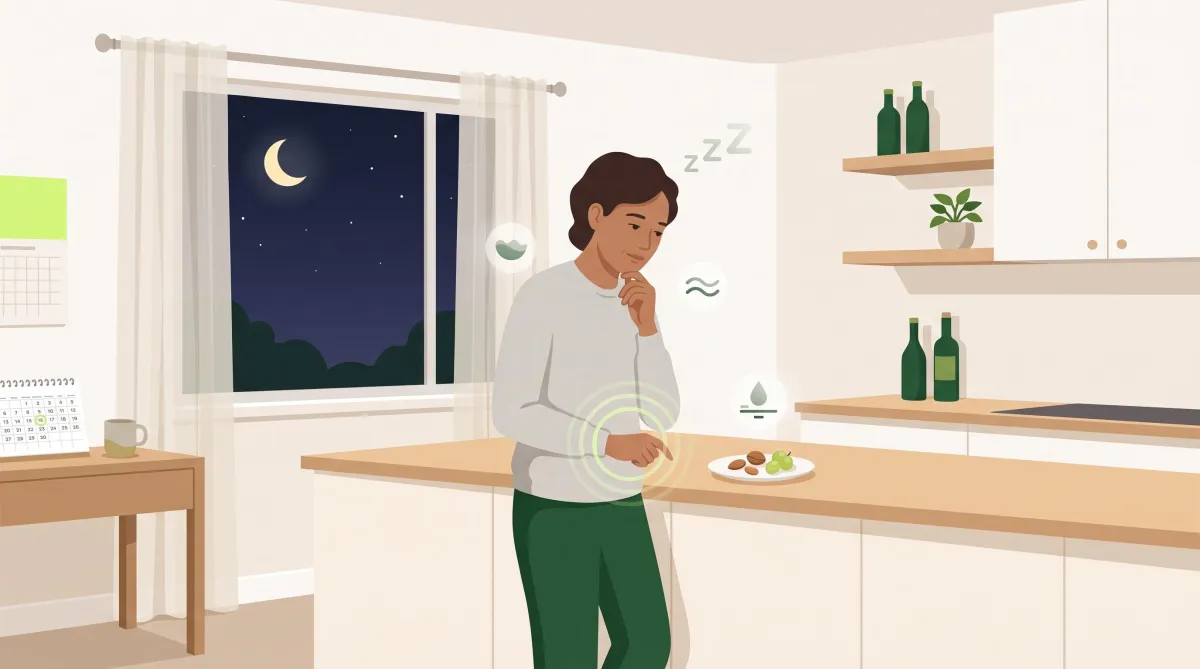
Why Am I So Hungry at Night? Hormonal, Metabolic, and Lifestyle Causes | Primary Wellness NY
Why Am I So Hungry at Night?
Feeling hungry at night is common. But if you regularly feel extremely hungry in the evening or wake up wanting to eat, it is worth looking at what may be driving the pattern.
Nighttime hunger can be related to something as straightforward as not eating enough during the day. It can also be influenced by sleep, stress, meal composition, physical activity, medications, metabolic health, and individual appetite regulation.
Being hungry at night does not automatically mean you have a hormone problem.
The most useful approach is to look at the pattern: when hunger occurs, what you ate earlier, how well you slept, how active you were, and whether other symptoms are present.
Quick Answer: Why Am I Always Hungry at Night?
Common reasons for nighttime hunger include:
Not eating enough during the day
Meals that are low in protein or fiber
Long gaps between meals
Increased physical activity
Poor sleep
Stress
Habitual nighttime eating
Restrictive dieting
Certain medications
Changes in appetite regulation
Blood sugar-related issues
Other metabolic or medical factors
If nighttime hunger is new, unusually intense, or accompanied by excessive thirst, frequent urination, unexplained weight changes, or other symptoms, it may be worth discussing with a healthcare professional.
Is It Normal to Feel Hungry at Night?
Yes.
Hunger is a normal biological signal.
If you eat dinner early and stay awake for several hours, it is not necessarily unusual to feel hungry again.
The issue is more about frequency, intensity, and context.
For example, occasional hunger before bed is very different from:
"I eat a full dinner and still feel like I cannot stop thinking about food every night."
Persistent or unusually strong hunger deserves a closer look.
Why Am I Hungry at Night Even After Eating Dinner?
There are several possible explanations.
Your dinner may not have been very filling
Meals containing adequate protein, fiber, and overall energy tend to be more satisfying than meals dominated by highly refined carbohydrates or very small portions.
You may have eaten too little earlier
If breakfast and lunch were very small, your body may be trying to compensate later.
This is particularly common among people who are actively trying to lose weight.
You may be confusing hunger with another signal
Thirst, boredom, stress, fatigue, and habit can sometimes feel similar to hunger.
That does not mean the hunger is "imaginary." It means the body's signals can overlap.
Your sleep may be inadequate
Sleep affects appetite regulation and food choices.
Your activity level may have increased
A new workout routine, physically demanding job, or increase in daily movement can increase energy requirements.
Can Poor Sleep Make You Hungrier at Night?
Yes.
Sleep and appetite are closely connected.
When you're consistently sleeping poorly, appetite and food-reward systems can be affected. Research has linked insufficient sleep with changes in hunger, appetite, and food intake.
This can create a frustrating cycle:
Poor sleep → increased appetite or cravings → nighttime eating → disrupted sleep → increased hunger the next day.
If you're also experiencing symptoms such as fatigue, snoring, frequent nighttime waking, or morning headaches, sleep quality deserves attention.
Your hunger may be only one part of a larger sleep-related pattern.
Can Stress Make You Hungry at Night?
It can.
Stress affects eating behavior differently from person to person.
Some people lose their appetite when stressed.
Others experience stronger cravings, particularly for highly palatable foods.
If your nighttime hunger appears primarily after stressful days, there may be a behavioral and physiological component to the pattern.
Stress can also interfere with sleep, creating another pathway through which nighttime eating may increase.
Rather than asking only:
"What hormone is causing my hunger?"
it may be more useful to ask:
"What happens to my hunger on stressful days compared with well-rested days?"
That comparison can reveal useful patterns.
Can Eating Too Little During the Day Cause Nighttime Hunger?
Absolutely.
This is one of the most overlooked explanations.
If you are trying to lose weight and spend the entire day eating very little, your body may respond with stronger hunger later.
A common pattern looks like this:
Coffee instead of breakfast
Small lunch
Minimal afternoon food
Light dinner
Intense hunger later at night
In this situation, the nighttime hunger may not mean that your metabolism is "broken."
You may simply be under-fueling earlier in the day.
Weight management does not require ignoring hunger signals.
Can Protein Help With Nighttime Hunger?
Protein is an important component of a satisfying diet.
Including an appropriate protein source in meals can support satiety and help preserve lean muscle during weight loss.
Examples include:
Eggs
Greek yogurt
Fish
Chicken
Lean meat
Cottage cheese
Beans
Lentils
Tofu
Other protein-rich foods
The appropriate amount depends on your individual nutritional needs, health status, activity level, and goals.
If you are consistently hungry between meals, looking at the overall composition of your diet may be more useful than simply trying to suppress the hunger.
What About Fiber?
Fiber can also contribute to fullness.
Foods such as:
Vegetables
Beans
Lentils
Whole grains
Berries
Apples
Nuts and seeds
can increase the satiety of meals.
A meal built around adequate protein, fiber, and minimally processed foods may keep you satisfied longer than a meal that is mostly refined carbohydrates.
That does not mean carbohydrates are inherently bad.
The overall dietary pattern matters.
Could Nighttime Hunger Be Related to Blood Sugar?
Sometimes.
Blood glucose regulation involves insulin and other hormones that help move and store energy.
Problems with glucose regulation can be associated with changes in appetite, but hunger alone does not diagnose insulin resistance or diabetes.
Other symptoms may be more informative, particularly when several occur together.
These can include:
Increased thirst
Frequent urination
Unexplained weight loss
Fatigue
Blurred vision
Increased hunger
Some people with insulin resistance have few obvious symptoms.
If you have risk factors for diabetes or metabolic disease, appropriate screening may be worth discussing with your healthcare provider.
You can also read our related guide on the signs of insulin resistance.
Can Hormones Make You Hungrier at Night?
Hormones are involved in appetite regulation, but it is usually too simplistic to blame persistent hunger on a single hormone.
Appetite is influenced by multiple systems involving:
Energy balance
The brain
The gastrointestinal tract
Insulin
Leptin
Ghrelin
Sleep
Stress
Food intake
Physical activity
Reproductive hormone changes can also influence appetite and body composition during certain life stages.
For example, some women notice changes in appetite and weight management during perimenopause and menopause.
But persistent hunger does not automatically mean your hormones are "out of balance."
Why Am I So Hungry at Night During Perimenopause?
Perimenopause can change several factors that influence eating behavior.
Hormonal fluctuations may occur alongside:
Poorer sleep
Night sweats
Increased stress
Mood changes
Changes in body composition
Changes in activity
Altered eating patterns
That combination can make nighttime hunger more noticeable.
If increased hunger occurs alongside irregular periods, hot flashes, sleep disruption, or other new symptoms, the broader hormonal picture may be worth discussing with a healthcare professional.
Primary Wellness NY provides hormone therapy for women in New York, but treatment is individualized and not every menopause-related symptom requires hormone therapy.
Why Do I Crave Sweets at Night?
Sweet cravings can have several explanations.
You may be:
Physically hungry
Eating too little during the day
Tired
Stressed
Following an overly restrictive diet
Habitually eating dessert at night
Responding to environmental cues
Sleep deprivation may also increase the appeal of high-calorie foods.
If you regularly experience intense nighttime cravings, consider whether they occur after particularly short nights or stressful days.
Patterns often tell you more than one isolated craving.
Is Nighttime Eating Bad for Weight Loss?
Not necessarily.
The idea that eating after a certain hour automatically causes weight gain is too simplistic.
Weight management depends on overall energy intake, dietary quality, physical activity, sleep, metabolic health, medications, and other individual factors.
Eating at night is not automatically responsible for weight gain.
However, nighttime eating can make weight management harder if it consistently adds substantial calories beyond your nutritional needs.
The important question is not simply:
"What time did I eat?"
It is:
"What am I eating, how much, why am I eating it, and how does it fit into my overall pattern?"
Why Am I Hungry at Night When I'm Trying to Lose Weight?
This is especially common with restrictive diets.
If your calorie reduction is too aggressive, hunger may become difficult to sustain.
You may successfully restrict food during the day but then experience intense hunger at night.
That can lead to:
Large evening meals
Repeated snacking
Cravings
Feeling out of control around food
Frustration
Abandoning the diet
A sustainable weight-management approach should account for hunger rather than treating hunger as a personal failure.
If you're struggling to lose weight despite consistently following a reasonable nutrition and activity plan, a broader medical evaluation may be useful.
Primary Wellness NY offers medical weight loss in New York with individualized assessment.
Can Medications Increase Hunger?
Yes.
Some medications can affect appetite or weight.
If your nighttime hunger began after starting, stopping, or changing a medication, discuss the timing with your prescribing clinician.
Do not stop or change prescribed medication on your own.
A medication review is often an important part of evaluating unexplained changes in appetite or weight.
When Should I See a Provider About Excessive Hunger?
Consider discussing persistent or unusually intense hunger with a healthcare professional if:
Hunger has changed significantly without an obvious reason.
You're gaining or losing weight unexpectedly.
You're constantly thirsty.
You're urinating much more frequently.
You have persistent fatigue.
You're experiencing significant sleep problems.
Your appetite changed after starting medication.
You're struggling with repeated overeating despite trying to control it.
Hunger is interfering with your weight-management goals.
The purpose of an evaluation is not to assume that something is wrong.
It is to determine whether there is a medical, nutritional, behavioral, medication-related, or lifestyle factor worth addressing.
What Can I Do About Nighttime Hunger?
Start by looking at the basics.
Eat enough during the day
Avoid routinely skipping meals or drastically restricting food.
Build satisfying meals
Include appropriate amounts of protein, fiber-rich carbohydrates, vegetables, and healthy fats.
Pay attention to sleep
Aim for a consistent sleep schedule and address persistent sleep problems.
Stay hydrated
Dehydration can sometimes be confused with hunger.
Look at stress
Notice whether nighttime eating follows particularly stressful days.
Track the pattern
For one to two weeks, record:
Meal times
What you eat
Hunger level
Sleep
Stress
Exercise
Evening cravings
This can reveal patterns that are difficult to see otherwise.
What If I'm Hungry Every Night?
If nighttime hunger happens occasionally, it may simply mean you're hungry.
If it happens every night, especially despite eating adequate meals, it is worth investigating the pattern.
Ask yourself:
Am I eating enough during the day?
Is my diet overly restrictive?
Am I sleeping well?
Has my stress increased?
Has my physical activity changed?
Did I recently change medication?
Am I gaining or losing weight unexpectedly?
Do I have increased thirst or urination?
Have other hormone or metabolic symptoms appeared?
These questions can help distinguish a normal appetite pattern from a broader issue.